


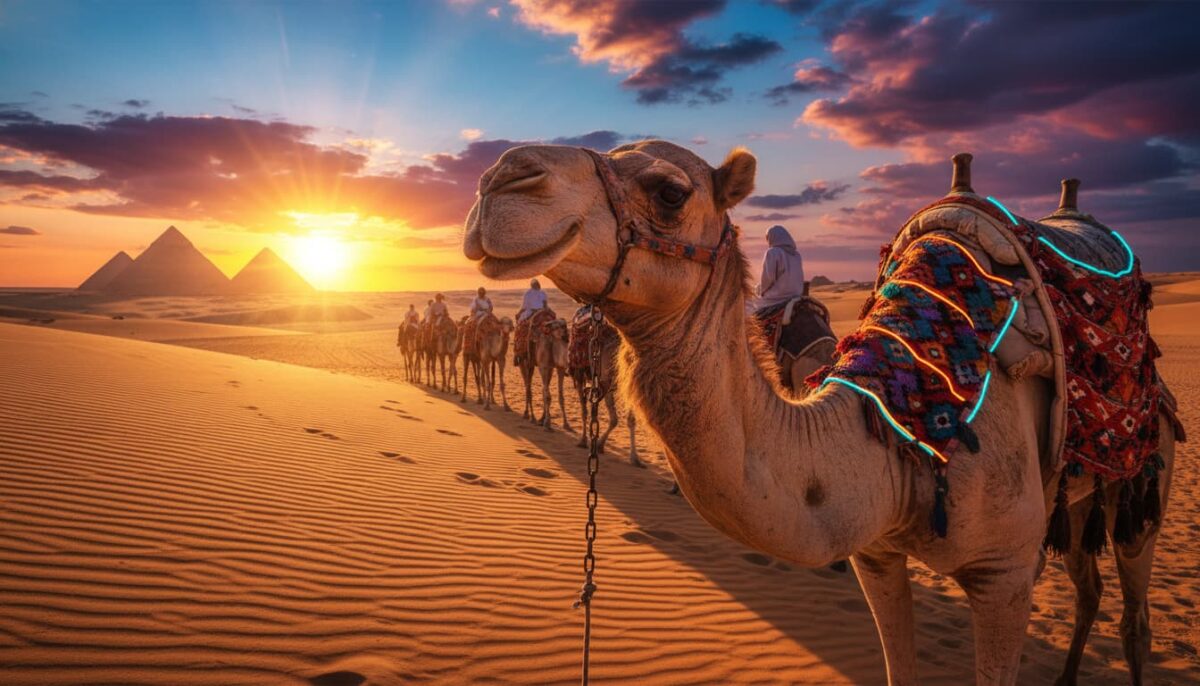
الجمال في مصر ليست مجرد حيوانات، بل هي رمز للبقاء والتقاليد والحياة في الصحراء. ولآلاف السنين، لعب الجمل دوراً رئيسياً في النقل والتجارة، و ثقافة البدوواليوم، لا تزال واحدة من الحيوانات الأكثر تميزًا وفرادةً يواجه المسافرون عند استكشاف صحاري مصر ومواقعها الأثرية وقراها النائية.
لماذا يتكيف الجمل بشكل مثالي مع صحراء مصر
يُعدّ الجمل في مصر مثالاً حقيقياً على التكيف مع ظروف الصحراء القاسية، فهو مُهيأ لتحمّل الحرارة والجفاف والرحلات الطويلة. تسمح له خصائصه الجسدية وأجهزته الداخلية بالعيش براحة في أماكن لا تستطيع معظم الحيوانات البقاء فيها.
كيف تستطيع الجمال في مصر البقاء على قيد الحياة في ظل الحرارة الشديدة؟
من أبرز صفات الجمل قدرته على البقاء في ظروف الصحراء القاسية. أرجل طويلة بفضل تصميمها الذي يُبقي جسمها مرتفعاً فوق الرمال الساخنة، وأقدامها العريضة المبطنة التي تمنعها من الغوص، تُعدّ الجمل حيواناً مثالياً للصحراء. فهي قادرة على قطع مسافات طويلة تحت شمس مصر الحارقة دون أن تتباطأ، مما يجعلها مثالية لطرق التجارة القديمة والسياحة الحديثة على حد سواء.
تكيفات الجمل الفريدة مع الماء والغذاء
يعتقد الكثيرون أن الجمل يخزن الماء في سنامه، لكن السنام في الواقع يخزن الدهون. تتحول هذه الدهون إلى طاقة، بل وحتى إلى رطوبة عند الحاجة، مما يسمح للجمل بالبقاء لأيام، أو حتى أسابيع، دون شرب الماء. كما أن فمه القوي والمرن يمكّنه من تناول نباتات الصحراء القاسية، والشجيرات الشائكة، والنباتات الجافة التي لا تستطيع معظم الحيوانات هضمها. هذه القدرة تجعل الجمل في مصر مناسبًا تمامًا لـ الحياة في الصحراء الكبرى وسيناء.
عيون الجمل الفريدة ورموشه الطويلة الواقية
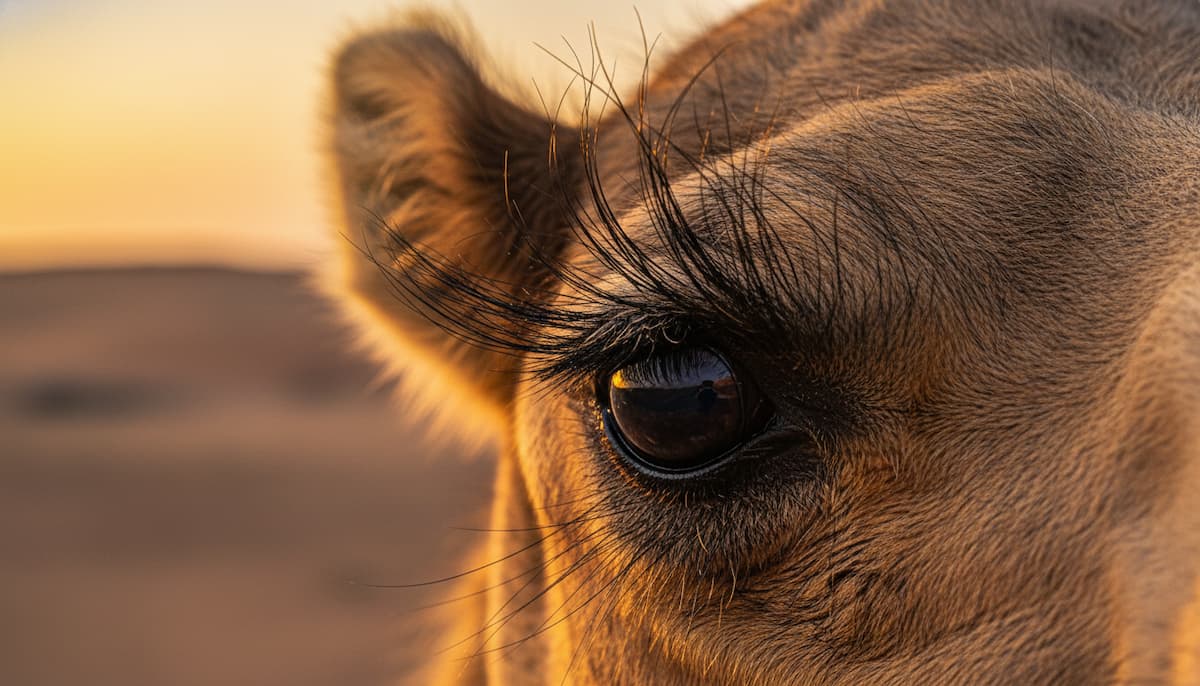
تُعدّ عيون الجمل من أبرز تكيفاته للبقاء على قيد الحياة في الصحراء. تعمل رموشه الطويلة والكثيفة كدروع طبيعية، تحمي عينيه من الرمال المتطايرة ورياح الصحراء العاتية. كما يمتلك الجمل أيضاً... الجفن الثالث وهذا يحمي أعينهم من الغبار والرمل. وهذا يسمح بـ الجمل في مصر للرؤية بوضوح والتنقل في الصحراء حتى أثناء العواصف الرملية القاسية.
دور الجمال في الثقافة والسياحة المصرية
لقد شكّل الجمل في مصر جزءًا لا يتجزأ من الحياة اليومية لقرون، إذ ساهم في التواصل عبر مساحات صحراوية شاسعة. واليوم، لا يزال الجمل رمزًا ثقافيًا قويًا، فضلًا عن كونه أحد أكثر التجارب السياحية شعبية في البلاد.
الجمال والحياة البدوية
لطالما كان الجمل شريكًا موثوقًا به في الحياة اليومية لدى المجتمعات البدوية، فهو يساعد العائلات على السفر ونقل البضائع وعبور مسافات طويلة في الصحراء. ويربط البدو علاقات وثيقة بجمالهم، ويفهمون سلوكها ويعتنون بها باحترام بالغ. وفي المناسبات والاحتفالات الخاصة، غالبًا ما ينظم البدو احتفالات خاصة. سباقات الجمال التقليديةتُبرز هذه الفعاليات أسرع وأقوى الجمال وتسلط الضوء على أهمية هذا الحيوان في تراثهم.
ركوب الجمال كأحد أفضل التجارب السياحية
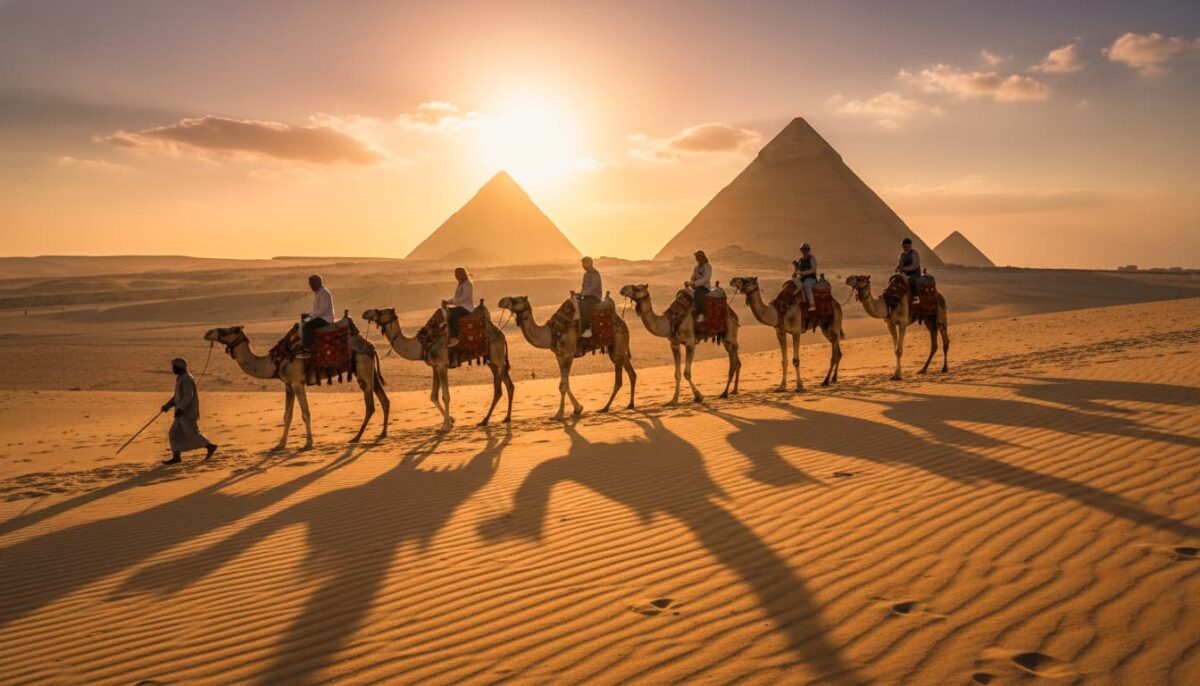
بالنسبة للزوار، يُعد ركوب الجمال في مصر من أكثر الطرق أصالةً لتجربة الصحراء. سواء كنت تستكشف أهرامات الجيزة، أو تقوم برحلة سفاري صحراوية بالقرب من الغردقة، أو تزور... جبال سيناءيمنحك التمايل اللطيف لركوب الجمال اتصالاً بالأرض لا تضاهيه أي مركبة. غالباً ما يقع السياح في غرام طبيعة الجمال الهادئة والصابرة. فعلى الرغم من ضخامة حجمها، إلا أنها حيوانات لطيفة تتحرك ببطء وسلاسة، مما يجعلها مناسبة للركوب لجميع الأعمار.
لماذا تبقى الجمال في مصر أهم حيوانات الصحراء
يرمز الجمل إلى القوة والصمود والتقاليد. فمن القوافل القديمة إلى رحلات السفاري الحديثة، لا تزال جمال مصر تلعب دورًا هامًا في الحياة اليومية والسياحة على حد سواء. إنها تذكير حي بتاريخ مصر وأسرار الصحراء. لكل من يزور مصر، إن مقابلة الجمل هي أكثر من مجرد فرصة لالتقاط الصورإنها فرصة لفهم حيوان فريد شكّل ثقافة مصر لقرون. بفضل مهاراته المذهلة في البقاء، وذكائه، وأهميته الثقافية العميقة، يُعدّ الجمل بحق أحد أبرز حيوانات الصحراء المصرية.