



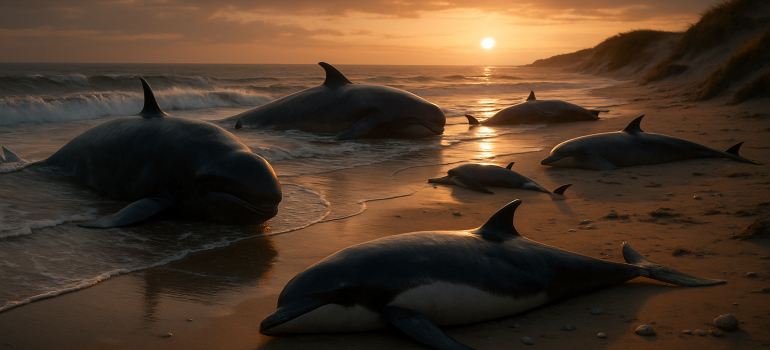
Нам часто попадаются душераздирающие фотографии и видео огромных китов или дельфинов, беспомощно выброшенных на песчаные пляжи, — и люди спешат им на помощь. брызги воды или пытаясь столкнуть их обратно в море. И каждый раз возникает вопрос.: Почему умирают киты и дельфины? Когда они покинут океан? Разве эти млекопитающие не дышат воздухом, как и мы? Если они могут дышать кислородом из воздуха, почему они не могут выжить вне воды?
Как дышат киты и дельфины?
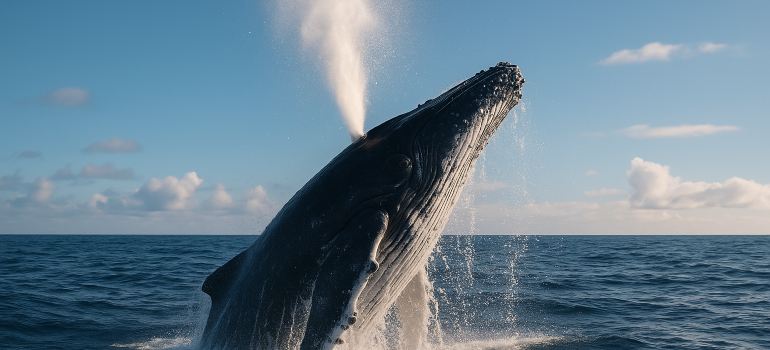
В отличие от рыб, которые извлекают кислород из воды с помощью жабр, киты и дельфины... морские млекопитающие Эти птицы дышат атмосферным кислородом через легкие. У них на макушке есть специальное отверстие, называемое дыхательным отверстием, которое функционирует как нос. Это позволяет им вдыхать воздух и выдыхать углекислый газ. Во время погруженийДыхательное отверстие остается плотно закрытым благодаря мощным мышцам, предотвращая попадание воды в дыхательную систему. Когда киты всплывают на поверхность, они открывают дыхательное отверстие и выпускают мощный поток воздуха и пара, после чего делают глубокий вдох и снова ныряют. Вы, вероятно, уже видели этот знаменитый фонтанообразный фонтан на фотографиях.
Как долго они могут оставаться под водой?
Дельфины обычно могут задерживать дыхание на 8–15 минут, а крупные киты — до 60 минут. Однако рекордсменом является клюворылый кит Кювье, который может нырять более чем на 100 минут. два часа и пятнадцать минут на одном дыхании! Эта способность обусловлена высокой концентрацией гемоглобина и миоглобина — двух белков, которые запасают кислород в крови и мышцах, — а также их способностью замедлять частоту сердечных сокращений во время глубоководных погружений для экономии кислорода.
Если они дышат воздухом, почему же они умирают на суше?
Киты и дельфины не умирают мгновенно от удушья, оказавшись вне воды, потому что они дышат через дыхательные отверстия, и технически они могут вдыхать и выдыхать на открытом воздухе. Однако, если они остаются на берегу, то в конечном итоге умирают. но не в первую очередь Потому что они не могут дышать. Реальные причины включают в себя:
1. Сокращение веса и внутреннего давления смертельно опасно для китов и дельфинов.
Синий кит может весить более 150 тонн (150 000 килограммов)В воде плавучесть поддерживает огромный вес тела. Но оказавшись на берегу, гравитация оказывает сильное давление на органы — особенно на легкие и сердце — вызывая их коллапс или прекращение функционирования. Их скелет не предназначен для поддержания такого веса вне воды, что приводит к смертельным внутренним повреждениям.
2. Перегрев и термическое напряжение
У китов и дельфинов имеется толстый слой жира, называемый подкожным жиром, который может достигать... толщина 30 сантиметров и служит изоляцией от холодной океанской воды. Однако эта же изоляция становится опасной на суше, где нет воды, которая могла бы охладить их тела. Их внутренняя температура быстро повышается, что приводит к тепловому стрессу, повреждению тканей и обезвоживанию.
3. Обезвоживание и повреждение кожи
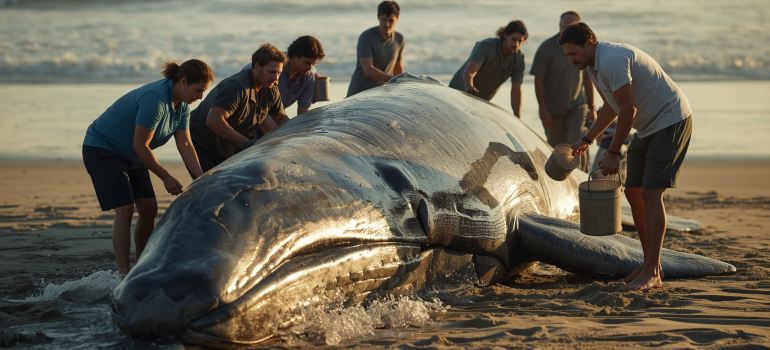
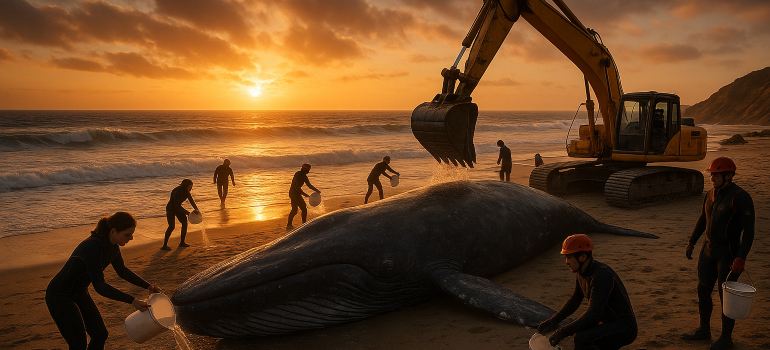
Их кожа приспособлена к постоянному поддержанию влажности. При контакте с воздухом она начинает... высыхают, трескаются и теряют влагу. быстро. Именно поэтому спасателей часто можно увидеть. распыление воды или накрывая китов мокрыми тряпками — чтобы поддерживать их водный баланс до тех пор, пока они не смогут вернуться в океан.
4. Ограниченная подвижность и физическое истощение
Киты и дельфины имеют обтекаемые тела Они приспособлены для эффективного передвижения в воде. На суше эта адаптация становится препятствием: они не могут двигаться или удерживать равновесие, что приводит к мышечной усталости, компрессионным травмам и, в конечном итоге, к смерти от истощения.
5. Голодание и истощение энергетических ресурсов.
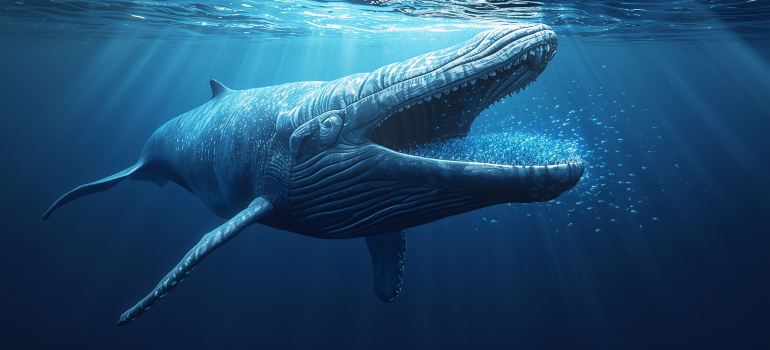
Эти гиганты потребляют огромное количество энергии. Синий кит, например, потребляет около 40 миллионов криля в день — примерно 2–101 тонн от массы тела. Оказавшись на мели, они теряют доступ к пище и быстро истощаются, что приводит к голоданию.
Почему киты вообще выбрасываются на берег?
Случаи выброса китов и дельфинов на берег документируются на протяжении веков — ежегодно во всем мире регистрируется около 2000 таких инцидентов. Тем не менее, точная причина остается одной из величайших загадок морской биологии. К основным теориям относятся:
-
Болезнь или старость: Больные или пожилые киты могут намеренно изолироваться и дрейфовать к берегу, чтобы мирно умереть.
-
Геологические нарушения: Подводные землетрясения или вулканическая активность могут нарушить их навигационные системы.
-
Человеческий фактор и шум гидролокатора: Морские гидролокационные системы излучают мощные звуковые волны, способные дезориентировать китов, заставляя их убегать в неправильном направлении — часто в сторону мелководья. Известный пример произошел в 2000 году на Багамах, когда 17 китов выбросились на берег вскоре после испытаний гидролокатора ВМС США.
Что следует предпринять, если кит выбросился на берег?
Когда спасатели обнаруживают выброшенного на берег кита или дельфина, каждая секунда на счету. Они немедленно начинают увлажнять кожу животного, используя ведра с морской водой или влажные тряпки. Влажные полотенца или одеяла аккуратно накрывают его тело, чтобы предотвратить перегрев или высыхание кожи. Затем спасатели корректируют положение животного, снимая нагрузку с его груди и плавников, чтобы помочь ему легче дышать. На протяжении всего процесса они должны сохранять спокойствие и тишину — внезапные шумы могут вызвать панику. Тем временем, морская спасательная операция Необходимо связаться с властями, чтобы организовать поставку профессионального оборудования и безопасное возвращение в море.
Теперь стало яснее, почему киты и дельфины не могут жить вне воды.
Хотя киты и дельфины — млекопитающие, дышащие воздухом, их тела точно приспособлены для жизни в океане. Оказавшись на суше, они сталкиваются со смертельной цепью последствий — от внутреннего давления и перегрева до обезвоживания и отказа органов — которая в конечном итоге приводит к их смерти в течение нескольких часов. Понимание этого явления имеет решающее значение. не только для науки, но и для совершенствования усилий по спасению и сохранению морской среды.