



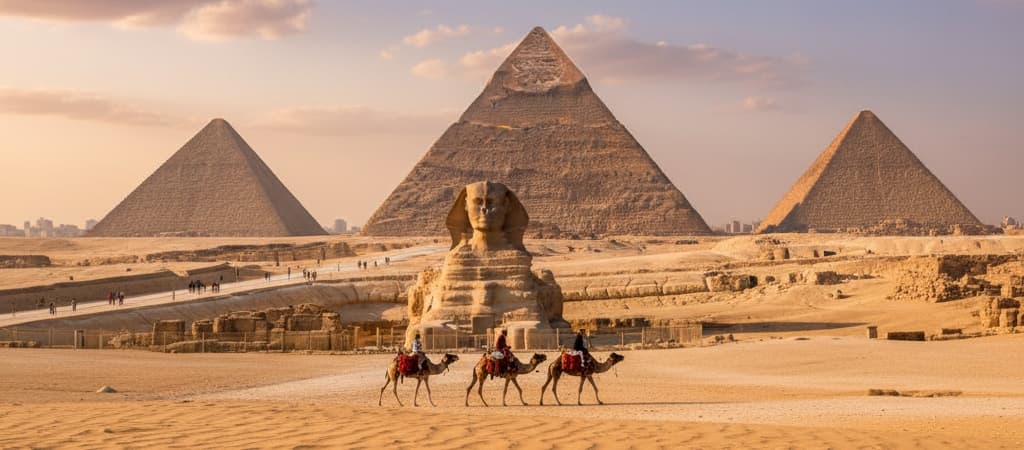
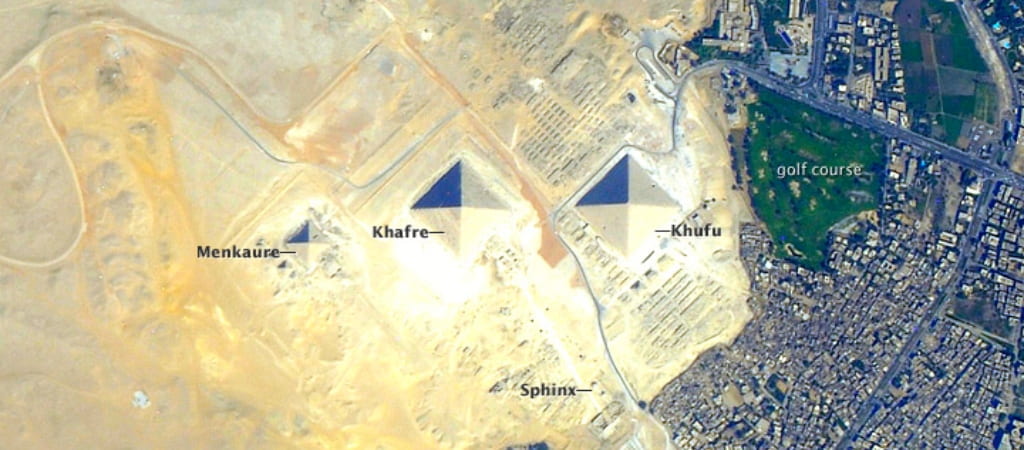
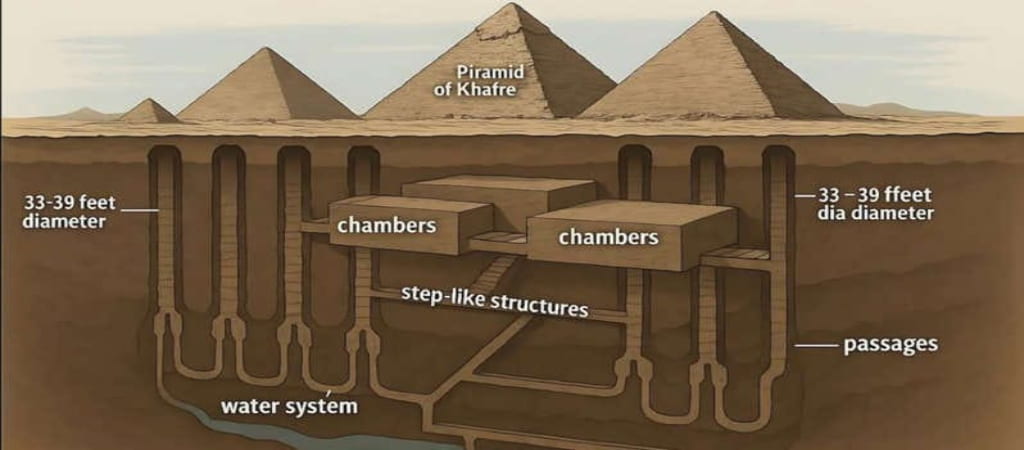
On March 15, 2025, the world witnessed significant media hype following a press conference in Italy. A team of researchers—comprising Italians Corrado Malanga (University of Pisa) and Armando Meggi (University of Naples), and Scotsman Filippo Biondi (University of Strathclyde)—announced an allegedly groundbreaking discovery beneath the Giza Plateau. The claim centered on the detection of a complete city discovered under Khafre’s Pyramid, including colossal structures and secret chambers at profound depths, all identified using a remote sensing technology known as Synthetic Aperture Radar (SAR). This news sparked widespread debate in both scientific and public circles, opening the door to numerous theories about the true purpose of the pyramids.
The claims were not ordinary; they described structures that defy the known engineering logic of the ancient Egyptians:
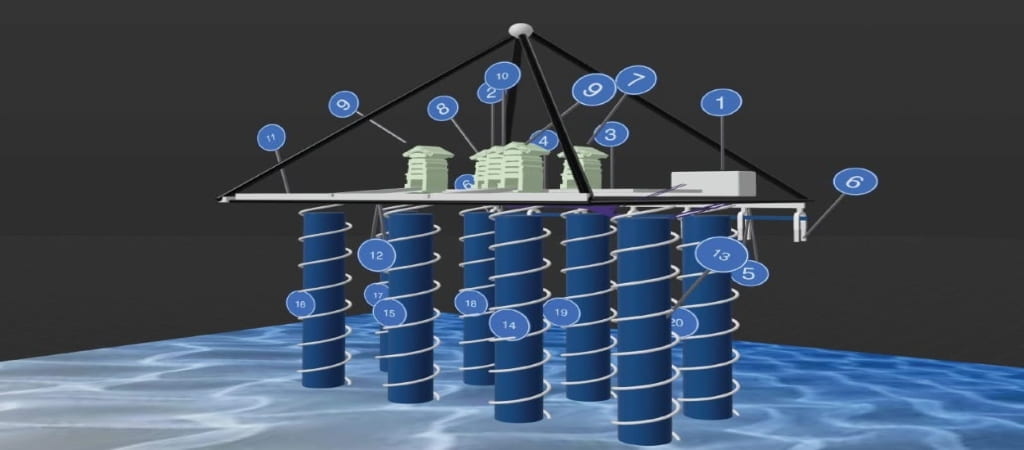
- Giant Columns: The team claimed to have discovered 8 massive cylindrical columns directly beneath Khafre’s Pyramid.
- Enormous Dimensions: Each alleged column measures over 600 meters in length—equivalent to a 200-story building and more than four times the height of Khafre’s Pyramid itself (approx. 140 meters).
- The Secret Chamber: The remote sensing indicated a large, 80-cubic-meter void (chamber) beneath these columns.
- Extended Structures: An interconnected structure was reported, extending for more than 2 kilometers beneath the surface, complete with a network of passages and channels.
These findings, if proven true, would not only change our understanding of ancient Egyptian history but would also rewrite the history of human engineering.
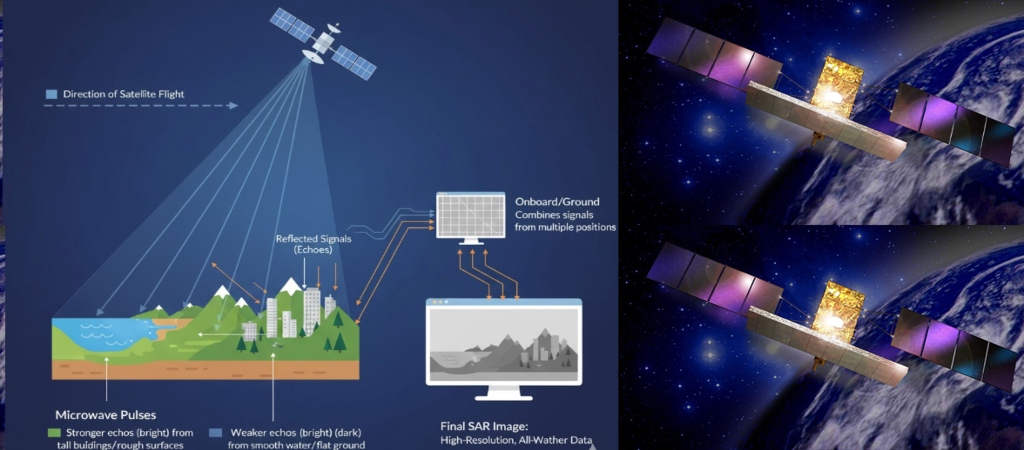
The methodology used: synthetic aperture radar (SAR)
The researchers used SAR technology, a type of radar normally applied in mapping and aerial surveys. It works by sending radio waves from satellites — in this case, the Italian Cosmo-SkyMed system — toward the Earth’s surface. The returning signals are then analyzed to create detailed images.
What makes this study unique is that it was the first time SAR was used for archaeology in this way. According to the team, the technology allowed them to detect deep underground structures from space, without needing excavation permits or even visiting Egypt in person.
Scientific refutation and academic skepticism
Despite the sensational nature of the claims, they were met with extreme caution and widespread skepticism from the scientific community. The main shortcomings can be summarized as follows:
1. Absence of peer review
In academic research, there’s a key rule called “blind peer review.” It ensures that every study is checked and confirmed by other experts before being accepted as valid. So far, these findings haven’t appeared in any trusted, peer-reviewed scientific journal. Instead, the first results and images were shared on a personal Facebook account, a move that goes against the core principles of serious research. True scientific work is verified through professional journals, not on social media.
2. The technical limitations of SAR
The biggest issue with these claims is the method used. While SAR technology works well for mapping surfaces and landscapes, it struggles to see deep underground. Its ability to pass through solid rock and soil is very limited.
- Experts in geophysics agree that this kind of radar — especially from a satellite — can’t go deeper than a few dozen meters, even under ideal conditions. Detecting detailed structures “600 meters or 2 kilometers below the surface” is simply impossible.
- Lawrence Conyers, a geology radar expert from the University of Denver, explained in an interview that “radar pulses from a satellite will not penetrate to the depths they are claiming,” calling the discovery a “gross exaggeration.”
3. Researcher self-contradiction about city discovered under the pyramid
The greatest irony is that two of the researchers (Malanga and Biondi) published a paper in 2022 in the reputable journal Remote Sensing concerning the Great Pyramid (Khufu). In the abstract of that study, they explicitly stated that SAR waves have a “weak effect in penetrating solid bodies.” This stark contradiction raises an obvious question: How did the same technology, deemed incapable of penetration three years ago, suddenly become capable of detecting structures 2 km deep?
4. Silence from academic institutions
The researchers’ universities, including Pisa and Strathclyde, have stayed silent. No official statements or press releases were issued. This is not unusual behavior, because if the discovery were real, the universities would be promoting great achievements.
5. The lead researcher’s background
The lead researcher, Corrado Malanga, although a professor of chemistry, has personal interests and numerous writings in fields of “pseudoscience,” including theories on alien abductions, “stargates,” and hypnosis to recover alleged memories. This background raises doubts about his commitment to rigorous scientific methodology when interpreting data.
Analysis of the claim’s virality: why now?
The viral spread of this story can be attributed to several factors:
- Media Marketing: The team chose to announce their findings via a press conference for the general media rather than a scientific conference for specialists. Journalists (who are non-experts) are more likely to be impressed by the results and publish them without immediate scientific scrutiny.
- Partial Credibility: The fact that the researchers have previously published legitimate research (like the 2022 paper) initially gave them a “heard voice.”
- Confirmation Bias: A large segment of the public is unconvinced that the pyramids are “just tombs” and wants to believe alternative theories (such as them being power generators or linked to lost civilizations). This “discovery” conveniently supported their desires.
It’s important to separate this claim from real scientific work like the ScanPyramids project, which used proven methods to find actual voids in Khufu’s Pyramid. Unlike sensational claims, its results were peer-reviewed and published in top scientific journals such as Nature.
So, the mystery of city discovered under the pyramid still waiting to be proven
Big discoveries need solid proof — and this one doesn’t have it yet. The idea of giant hidden structures beneath Giza sounds exciting, but without verified data, it stays more science fiction than fact. Egyptologists don’t rule out smaller voids under the plateau, but claims of 600-meter columns need real evidence, not blurry radar scans or Facebook posts. If you’re curious to see the wonders of Egypt yourself, plan a trip to Cairo with Hurghada Today. There are waiting you real mysteries of ancient history, and city discovered under the pyramid….can wait a little more.
References (suggested based on the source material)
- Biondi, F., & Malanga, C. (2022). “Micro-Geomorphological and SAR Data Analysis of the Main Pyramid of Giza, Egypt (Khufu Pyramid).” Remote Sensing, 14(18), 4578. (To reference their self-contradiction).
- Press statements attributed to Dr. Lawrence Conyers, University of Denver, to media outlets (e.g., The Daily Mail), March 2025.
- Morishima, K., Kuno, M., Nishio, A. et al. (2017). “Discovery of a large void in Khufu’s Pyramid by observation of cosmic-ray muons.” Nature, 552, 386–390. (As a reference for the ScanPyramids project methodology).
- Source material (YouTube, Amr Abdeen), based on media reports of the press conference held in Italy on March 15, 2025.Keywords:Khafre’s Pyramid, discovery under the pyramids, Synthetic Aperture Radar (SAR), Corrado Malanga, archaeology, scientific debunking, secret chambers, secrets of the pharaohs, University of Pisa, Giza Plateau.