



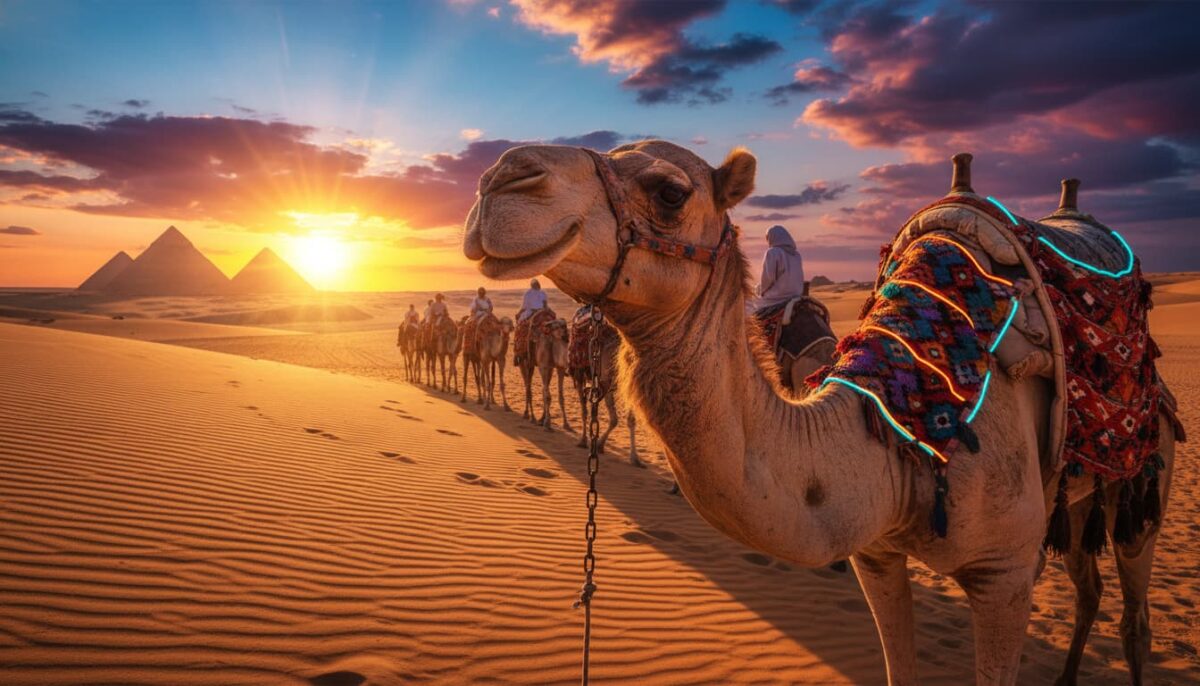
The camels in Egypt are more than just animals. They are a symbol of survival, tradition, and life in the desert. For thousands of years, the camel played a major role in transportation, trade, and Bedouin culture. Today, it remains one of the most recognizable and unique animals travelers encounter when exploring Egypt’s deserts, ancient sites, and remote villages.
Why the camel is perfectly adapted to Egypt’s desert
The camel in Egypt is a true master of desert survival, built to handle heat, dryness, and long journeys. Its physical features and internal systems allow the camel to live comfortably in places where most animals could never survive.
How camels in Egypt survive extreme heat?
One of the most impressive qualities of the camel is its ability to survive in harsh desert conditions. With long legs that keep the body high above hot sand, and wide padded feet that prevent sinking, the camel is built for the desert. It can walk long distances under the strong Egyptian sun without slowing down, making it ideal for ancient trade routes and modern tourism alike.
The camel’s unique water and food adaptations
Many people believe that a camel stores water in its hump, but the hump actually stores fat. This fat converts into energy and even moisture when needed, allowing the camel to go days, or even weeks, without drinking. Its strong, flexible mouth lets it eat tough desert plants, thorny bushes, and dry vegetation that most animals cannot digest. This ability makes the camel in Egypt perfectly suited to life in the Sahara and Sinai.
The camel’s unique eyes and long protective eyelashes
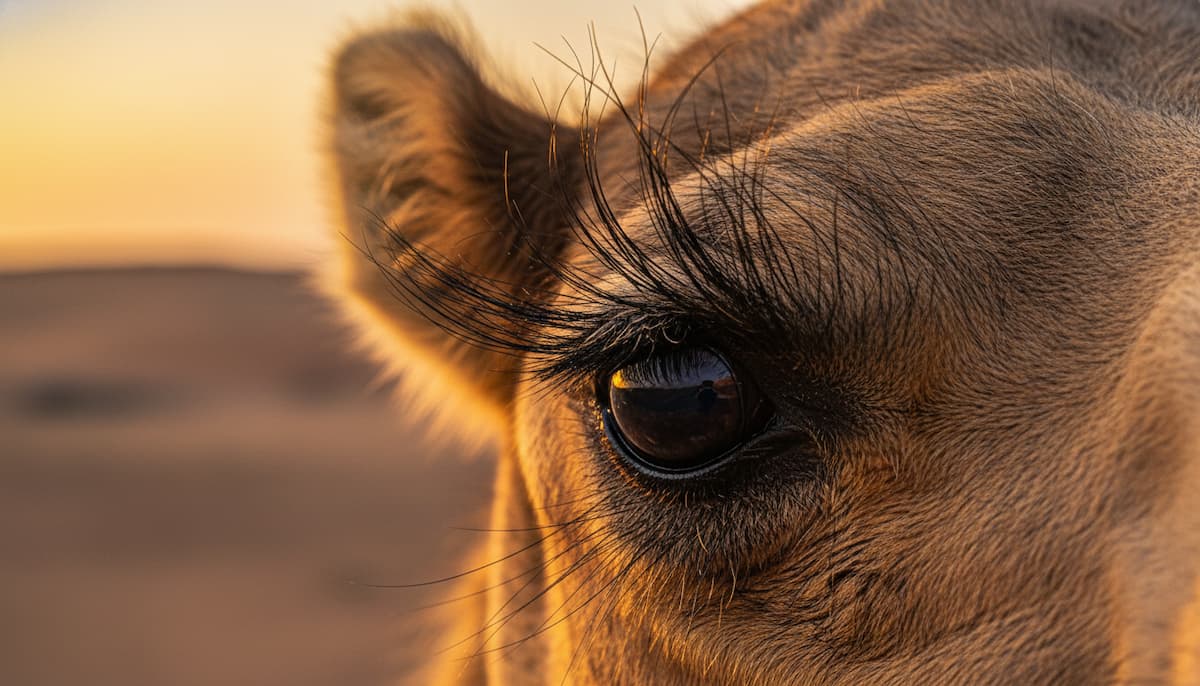
The camel’s eyes are one of its most impressive adaptations for surviving the desert. Their long, thick eyelashes act as natural shields, protecting the eyes from blowing sand and strong desert winds. Camels also have a special third eyelid that protects their eyes from dust and sand. This allows the camel in Egypt to see clearly and navigate the desert even during harsh sandstorms.
The role of camels in Egyptian culture and tourism
The camel in Egypt has shaped daily life for centuries, supporting communication across vast desert landscapes. Today, the camel remains a powerful cultural symbol while also serving as one of the country’s most popular tourist experiences.
Camels and Bedouin Life
For Bedouin communities, the camel has always been a trusted partner in daily life, helping families travel, carry goods, and cross long desert routes. Bedouins form strong bonds with their camels, understanding their behavior and caring for them with deep respect. On special occasions and celebrations, Bedouins often organize traditional camel races. These events showcase the fastest and strongest camels and highlight the importance of the animal in their heritage.
Camel riding as a top tourist experience
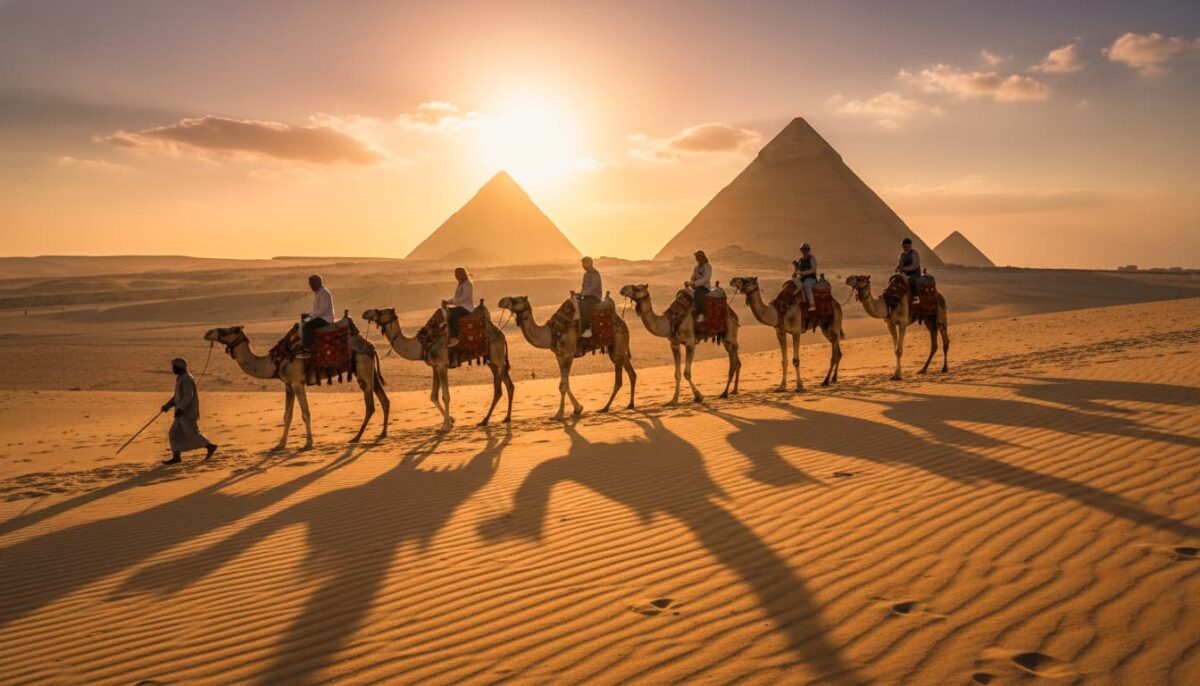
For visitors, riding a camel in Egypt is one of the most authentic ways to experience the desert. Whether you are exploring the Pyramids of Giza, taking a desert safari near Hurghada, or visiting the mountains of Sinai, the gentle sway of a camel ride gives you a connection to the land that no vehicle can match. Tourists often fall in love with the calm, patient nature of the camel. Despite their size, they are gentle animals that move slowly and smoothly, making them suitable for riders of all ages.
Why the camels in Egypt remain the most important desert creatures
The camel represents strength, endurance, and tradition. From ancient caravans to modern safaris, the camels of Egypt continue to play an important role in both daily life and tourism. They are living reminders of Egypt’s history and the secrets of the desert. For anyone visiting Egypt, meeting a camel is more than just a photo opportunity. It is a chance to understand a unique animal that has shaped Egypt’s culture for centuries. With its incredible survival skills, intelligence, and deep cultural importance, the camel truly stands as one of Egypt’s most iconic desert animals.