



لقد حانت اللحظة المنتظرة! يفتتح المتحف المصري الكبير أبوابه رسميًا اليوم، 1 نوفمبر 2025. يقع هذا المعلم التاريخي الرائع في الجيزة، أمام الأهرامات مباشرةً. يُعتبر بمثابة أكبر متحف أثري في العالميمتد المتحف على مساحة 500 ألف متر مربع، وقد بُني بتكلفة تجاوزت مليار و4 مليارات جنيه إسترليني، ويضم أكثر من 100 ألف قطعة أثرية قديمة، مما يتيح للزوار رحلة استثنائية عبر التراث المصري الخالد.
لماذا احتاجت مصر إلى متحف ضخم كهذا؟
لطالما حافظت مصر على أحد أغنى التراثات الأثرية في العالم على مرّ القرون. ولكن مع ازدياد الاكتشافات، ازدادت الحاجة إلى موطن جديد، قادر على الحفاظ على مجد مصر القديمة وعرضه بالكامل.
1. كنز متنامٍ تجاوزت مساحته منازله
لأكثر من 150 عامًا، واجهت الآثار المصرية التي لا تقدر بثمن تحديًا كبيرًا. ببساطة، كان هناك عدد هائل من القطع الأثرية، ومساحة غير كافية لعرضها. لم يكن المتحف المصري في ميدان التحرير (الذي افتُتح عام 1902) يتسع إلا لعرض جزء صغير من مجموعته الكاملة. حوالي 120 ألف قطعة أثريةومع ذلك، احتوى الطابق السفلي ومخازنه على مئات الآلاف من العناصر الأخرى التي لم يكن من الممكن عرضها بسبب قيود المساحة والمرافق القديمة.
2. من متحف إلى آخر
بدأت أولى الجهود الرسمية لحماية الآثار المصرية في عهد محمد علي باشا عام 1835، عندما عُرضت مجموعة صغيرة من القطع الأثرية في مبنى في حديقة أزباكيا في القاهرة. كان هذا أول متحف للآثار في مصر، على الرغم من صغر حجمه وضعف حمايته. في عام 1858، نقل أوغست مارييت، مؤسس مصلحة الآثار المصرية، المجموعة إلى بولاق، على ضفاف النيلأصبح أول متحف حقيقي للآثار في مصر، لكنه تعرض للفيضانات عدة مرات، مما أدى إلى تلف القطع الأثرية. بعد الفيضانات الشديدة، نُقلت المجموعة إلى قصر إسماعيل باشا في الجيزةحيث بقي مؤقتاً.
3. المتحف المصري في ميدان التحرير (1902-2025)
افتُتح المتحف المصري الحالي، الذي صممه المهندس المعماري الفرنسي مارسيل دورنيون، عام 1902 في ميدان التحرير. وكان يضم عشرات الآلاف من القطع الأثرية، بما في ذلك جميع كنوز توت عنخ آمون.
4. ميلاد مقر دائم: المتحف المصري الكبير
عندما اكتشف هوارد كارتر مقبرة توت عنخ آمون (KV62) في نوفمبر 1922، وجد هو وفريقه أكثر من 5000 قطعة أثرية مذهلة بداخلها. بعد ذلك، حتى متحف التحرير أصبح مكتظًا. ومن هنا ولدت فكرة إنشاء المتحف المصري الكبير - لإنشاء متحف مصري كبير منزل دائم جديرة بإرث مصر الخالد.
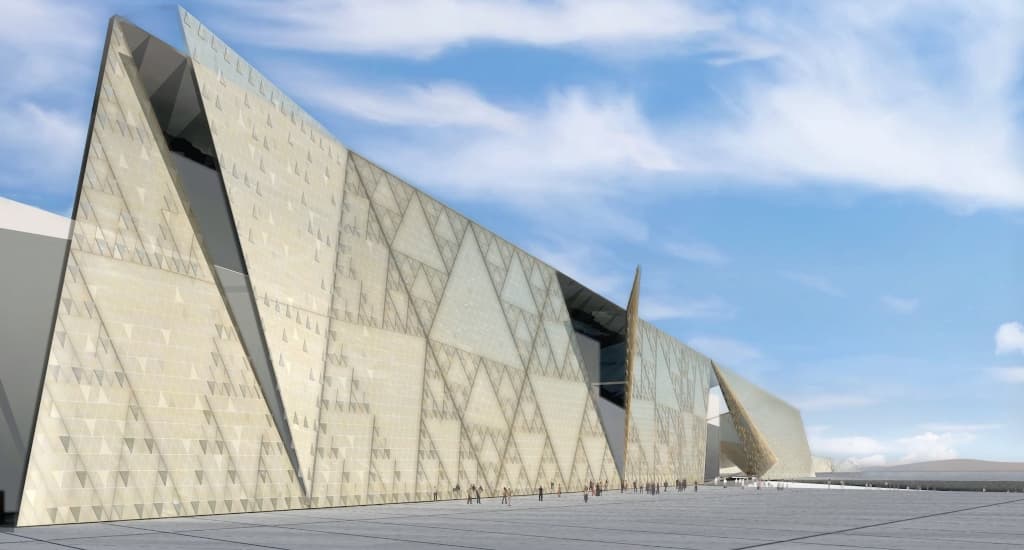
تناغم بين التراث والحداثة في المتحف المصري الكبير
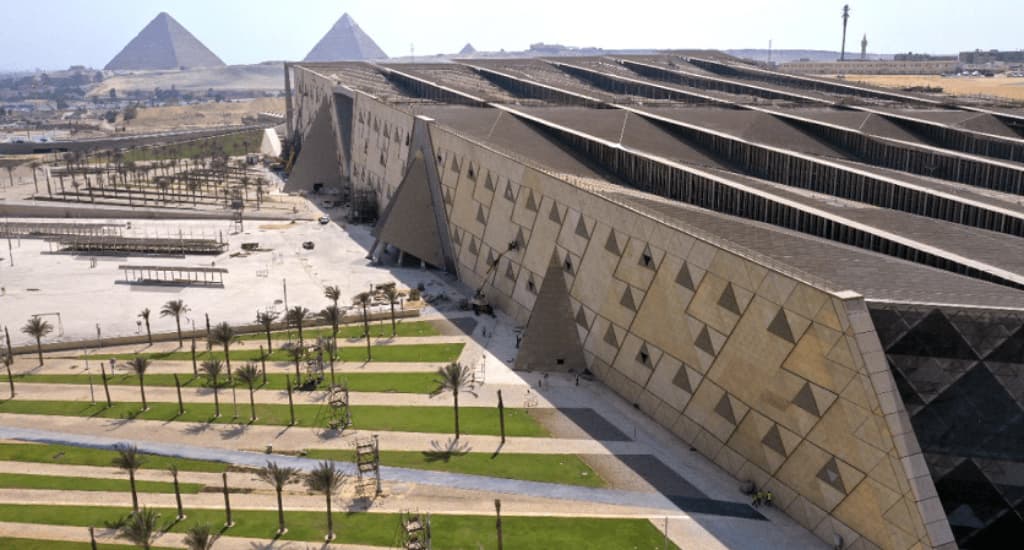
تم تصميم المتحف المصري الكبير بواسطة هينيغان بينغ للهندسة المعمارية من أيرلندا. فازوا بمسابقة عالمية برعاية اليونسكو، شارك فيها أكثر من 1500 مشارك من 83 دولة. يندمج التصميم بسلاسة مع هضبة الجيزة، مما يجعل المتحف يبدو جزءًا لا يتجزأ من المشهد الطبيعي. تسمح واجهته المصنوعة من المرمر، والمكونة من ألواح مثلثة شفافة، بدخول ضوء الشمس الطبيعي. والنتيجة هي توهج ذهبي ناعم في الداخل، مستوحى من ضوء المعابد المصرية القديمة.
من رمسيس الثاني إلى الدرج الكبير: رحلة بصرية عبر الزمن
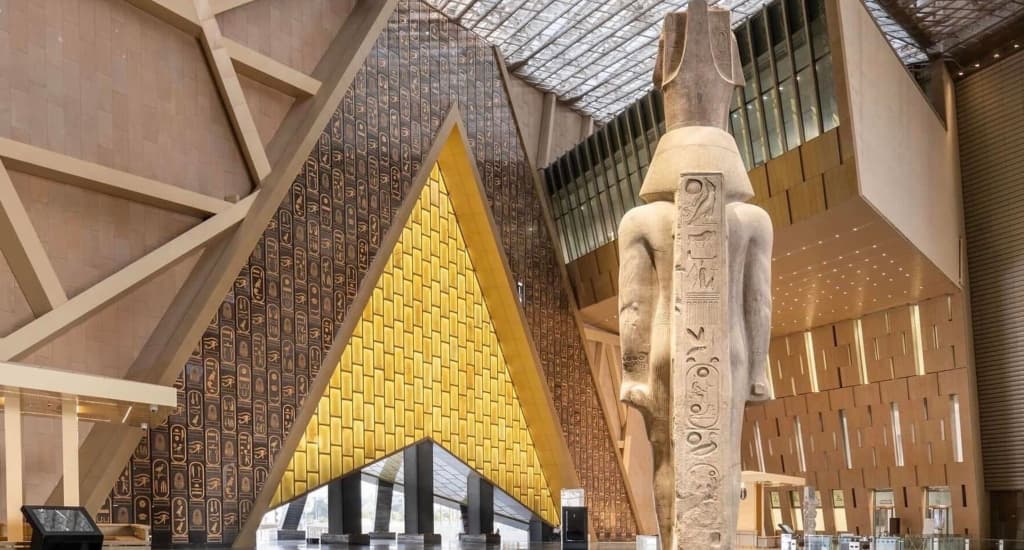
أول ما يراه الزوار في المتحف المصري الكبير هو تمثال رمسيس الثاني الضخم، تحفة فنية حقيقية من روائع الفن القديم. نُقل هذا التمثال، الذي يعود تاريخه إلى 3200 عام، بعناية فائقة من ميدان رمسيس في القاهرة، في عملية هندسية معقدة اكتملت عام 2018. وخلفه تقف تحفة المتحف الرئيسية، الدرج الكبيريمتد المتحف على مساحة 6000 متر مربع، ويضم 80 قطعة أثرية ضخمة تُخلّد ذكرى أعظم فراعنة مصر وآلهتها. ويُشعرك صعود هذه الأدراج وكأنك في رحلة عبر تاريخ مصر القديم، تنتهي بإطلالة بانورامية خلابة على أهرامات الجيزة العظيمة من خلال واجهة المتحف الزجاجية.
قاعات العرض: من فجر الحضارة إلى مجد توت عنخ آمون
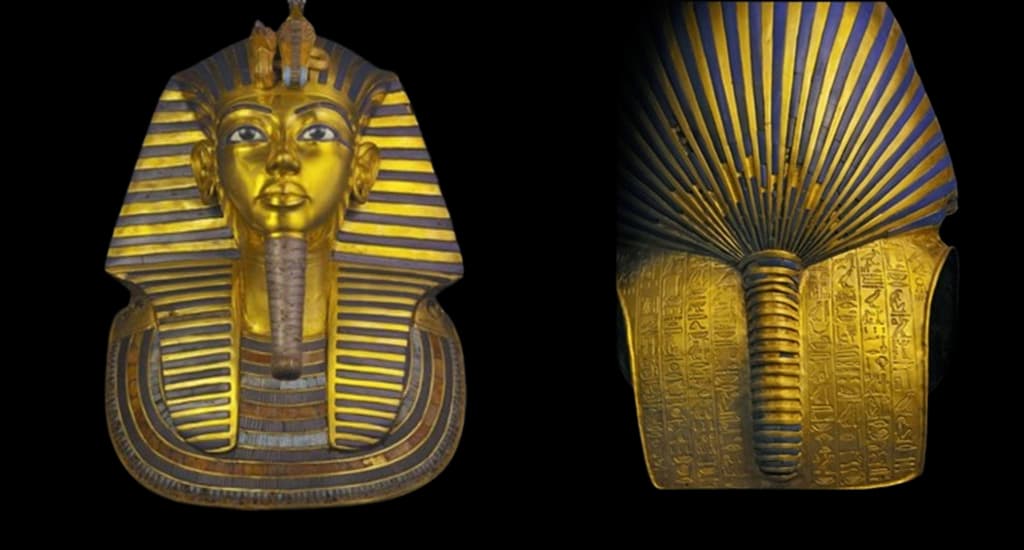
يضم المتحف المصري الكبير 12 قاعة عرض رئيسية مقسمة إلى أربعة أقسام زمنية، تغطي التاريخ المصري من من العصر ما قبل الأسرات إلى العصر اليوناني الرومانييضم المتحف قاعتين كاملتين مخصصتين لتوت عنخ آمون، تعرضان جميع القطع الأثرية البالغ عددها 5398 قطعة من مقبرته معًا لأول مرة في التاريخ. ستشاهد هناك قناعه الذهبي، وعربته، ومجوهراته، وأسلحته، ومقتنياته الشخصية. يستخدم المعرض تقنية سرد القصص الرقمية التفاعلية لسرد حياة الفرعون الشاب ووفاته.
كنوز خفية تم الكشف عنها
يضم المتحف أيضاً روائع فنية تم ترميمها حديثاً، بما في ذلك:
- كنوز الملكة حتب حرس (والدة الملك خوفو)، معروضة سليمة في حالتها الأصلية.
- مخبأ دندرة وكنز توابيت العساسيف الذي تم اكتشافه مؤخراً في الأقصر.
- الغامض فأس العباسية، يعود تاريخها إلى أكثر من 700 ألف عام - أحد أكثر الاكتشافات إثارة للحيرة في مصر.
خارج القاعات الرئيسية يقف قارب خوفو متحف، حيث يتم عرض عملية ترميم مركب الفرعون خوفو الشمسي مباشرة أمام الزوار، وهو معرض ترميم مفتوح لمدة ثلاث سنوات.
يُعد المتحف المصري الكبير أيضاً مركزاً ثقافياً وتعليمياً
المتحف ليس مجرد مساحة عرض، بل يشمل أيضاً:
- متحف للأطفال (5000 متر مربع) تقدم تعليمًا تفاعليًا عن مصر القديمة.
- مركز صيانة حديث ومتطور (32000 م²) تقع على عمق 10 أمتار تحت الأرض.
- مكتبة متخصصة في علم المصريات وقاعة مؤتمرات تتسع لـ 1000 ضيف.
- مطاعم ومراكز تجارية وحدائق مصممة لجعل المتحف وجهة ثقافية متكاملة.
تسليط الضوء الإعلامي العالمي
حظي افتتاح المتحف المصري الكبير باهتمام إعلامي عالمي. صحيفة الغارديان وصفه بأنه "أهم مشروع ثقافي في القرن الحادي والعشرين". صحيفة نيويورك تايمز وأشادت به "التناغم البارع بين الأصالة والتصميم العصري"، بينما ناشيونال جيوغرافيك وصفته وكالات الأنباء الرئيسية، بما في ذلك رويترز و وكالة أسوشيتد برسوقد بثت القناة الحفل مباشرة، مما يؤكد عودة مصر كقائدة ثقافية عالمية.
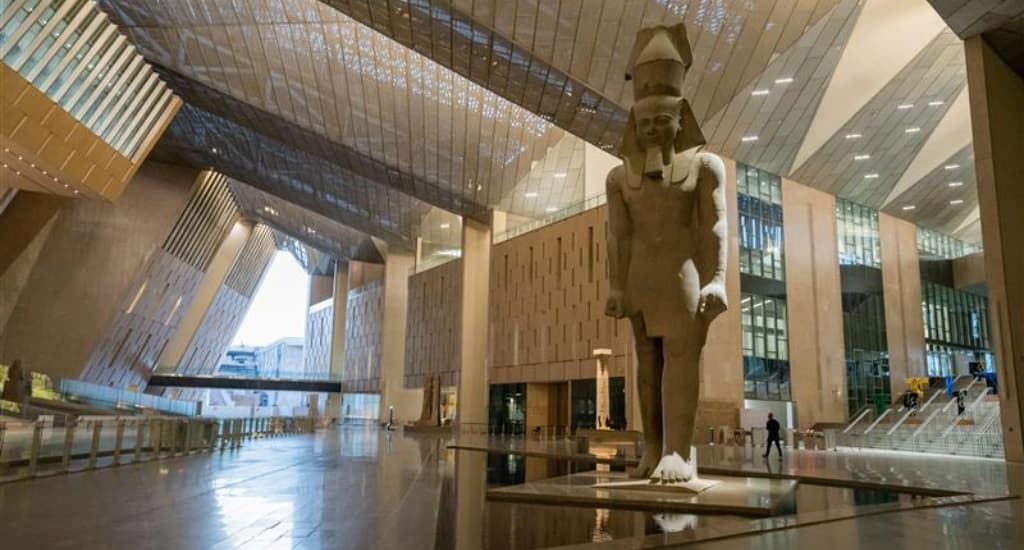
بوابة مصر الثقافية الجديدة – المتحف المصري الكبير
يمثل افتتاح المتحف بداية فصل جديد في علاقة البشرية بإحدى أقدم حضاراتها. سيُقام حفل الافتتاح الرسمي للضيوف في الفترة من 1 إلى 3 نوفمبر 2025، على أن يبدأ استقبال الجمهور في 4 نوفمبر، بالتزامن مع الذكرى السنوية 103 لاكتشاف مقبرة توت عنخ آمون. من المتوقع أن... لاستقبال أكثر من 5 ملايين زائر سنوياًمما يعزز مكانتها كركيزة أساسية في استراتيجية مصر السياحية والحفاظ على التراث. إذا كنتم ترغبون في الانغماس في هذه القصة الخالدة لمصر التي تضمن استمرار مصر القديمة في إلهام العالم الحديث، فما عليكم سوى التواصل مع "الغردقة اليوم".