



Чтобы по-настоящему ощутить дух Ближнего Востока, нужно смотреть дальше памятников и понимать людей. Социальные и традиционные обычаи в Египте место назначения построенный на фундаменте безмерной щедрости и глубокого уважения. Для гости программы Hurghada TodayЗнание этих местных «неписаных правил» может превратить обычный отпуск в культурный обмен, меняющий жизнь.
Гостеприимство и «Карам»
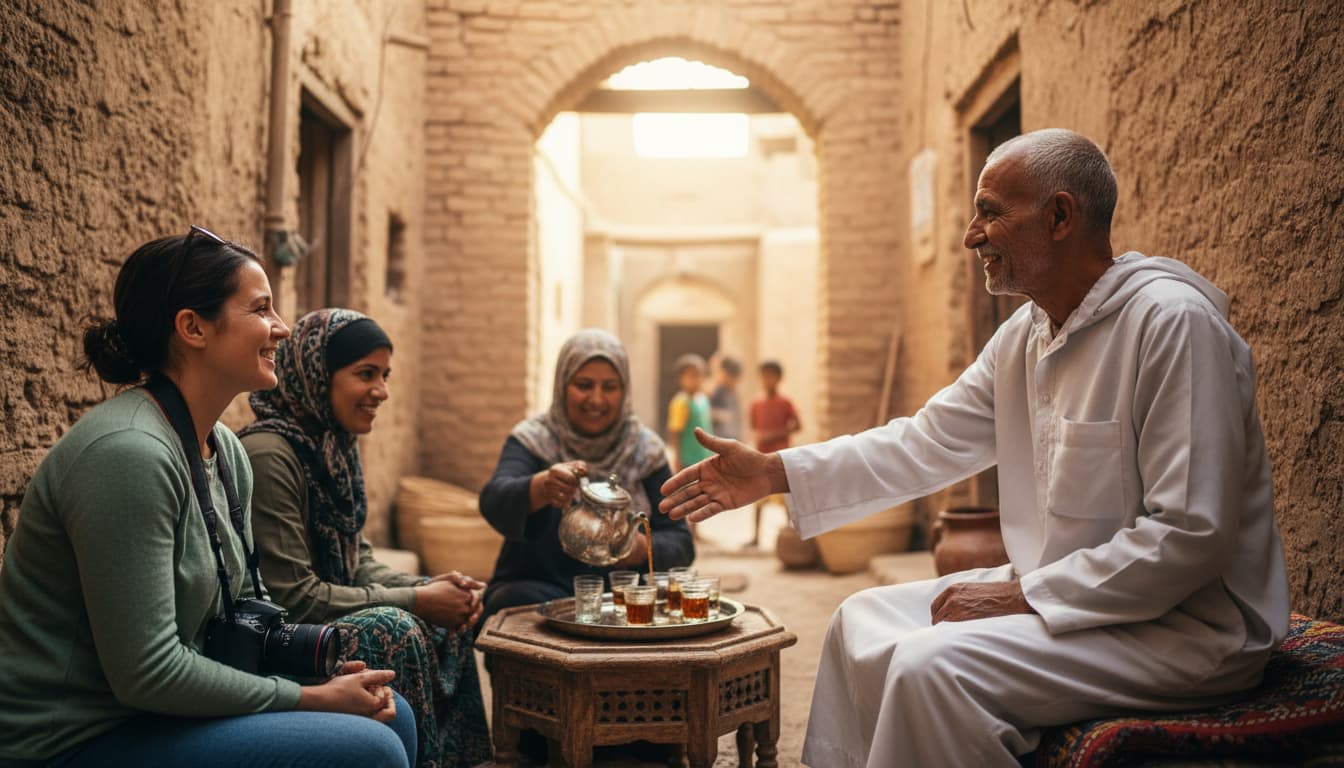
Гостеприимство, или КарамЭто, пожалуй, самый важный из всех социальных и традиционных обычаев в Египте. Египтяне очень гордятся тем, что создают для гостей атмосферу радушного приема.
-
Принимаю приглашения: Если местный житель приглашает вас на чай или обед, это искренний жест. Хотя изначально вежливо отказаться (этот обычай называется...) АзумаЕсли они настаивают, то принятие их просьбы считается проявлением уважения.
- Жертва воинств: Один из самых трогательных обычаев Египта заключается в том, что даже самые скромные семьи предлагают гостям всё, что у них есть. Часто семьи приносят свои лучшие продукты и тайники, чтобы устроить для вас пир. На столе могут оказаться свежевыжатые соки, даже если это последние оставшиеся фрукты. Египетский домФилософия заключается в том, что для гостя нет ничего слишком хорошего.
-
Дар дарения: Если вас пригласили в египетский дом, никогда не приходите с пустыми руками. Традиция приносить детям сладости, шоколад или небольшие подарки — это обычное дело.
Правила этикета за столом и правило «правой руки»
В Египте еда — это язык любви. Однако существуют определенные обычаи, касающиеся приема пищи:
-
Правая рука: При еде всегда используйте правую руку, особенно при работе с такими продуктами, как хлеб. Левая рука традиционно считается нечистой.
-
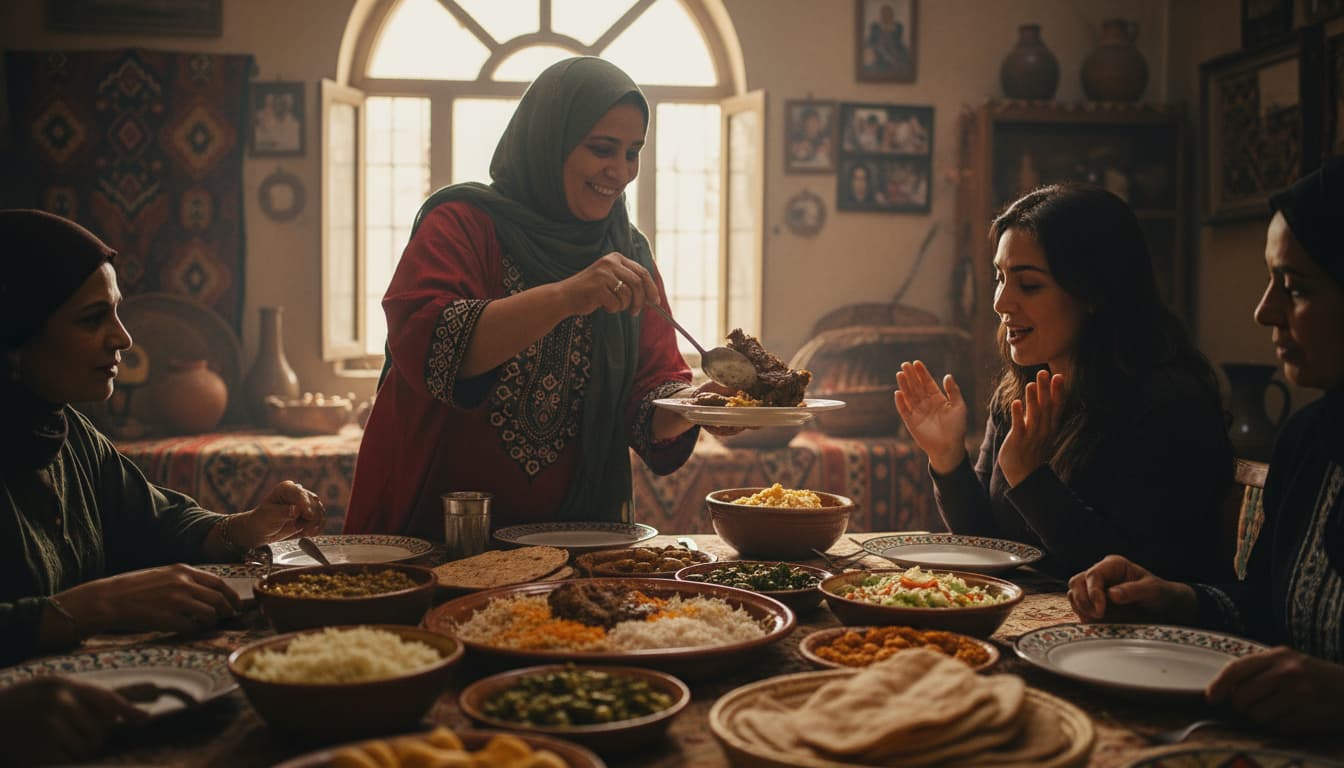
«Материнская доля»: Не удивляйтесь, если хозяйка (мать или жена) лично положит вам на тарелку самый большой и лучший кусок мяса. Это знак глубокого уважения и привязанности.
-
Бесконечное предложение: Вам могут предложить вторую или третью порцию сотни раз! Даже если вы скажете, что наелись, хозяин, скорее всего, будет настаивать, чтобы вы взяли еще. Это настойчивое предложение — отличительная черта египетского гостеприимства. Они хотят убедиться, что вы покинете стол по-настоящему довольными.
-
Комплимент "Соль": Если вы едите в гостях, избегайте добавления соли в еду до того, как попробуете её. Это может создать впечатление, что хозяева не отличаются высоким уровнем кулинарного мастерства.
-
Оставив немного: Часто считается вежливым оставить на тарелке совсем небольшой кусочек. Это даёт хозяину понять, что он предоставил вам более чем достаточно и вы полностью удовлетворены.
Скромность и дресс-код как социальные и традиционные обычаи в Египте
Египет — консервативная страна, и соблюдение местного дресс-кода является одним из важнейших аспектов бережного отношения к одежде. таможенные правила в Египте. Пока курортные зоны В таких городах, как Хургада, более спокойная атмосфера: при посещении городов или местных рынков принято прикрывать плечи и колени. При входе в мечеть как мужчины, так и женщины должны снимать обувь. Женщинам следует покрывать волосы, руки и ноги платком и абайей, которые обычно предоставляются у входа в крупные туристические мечети.
Язык тела и поведение в общественных местах
Понимание невербального общения является ключом к соблюдению обычаев в Египте. В Египте понятие личного пространства более распространено, чем на Западе. Нередко можно увидеть людей одного пола, стоящих или сидящих очень близко друг к другу во время разговора. Держаться за руки в браке, как правило, допустимо. Но слишком откровенные публичные проявления чувств (например, поцелуи) – это совсем другое дело. считается неуместным в общественных местах Это может быть оскорбительно для местных жителей. Очень часто можно увидеть мужчин, обнимающихся, идущих под руку или держащихся за руки на публике. Путешественникам важно понимать, что это платонический знак глубокой дружбы и братства, и он не несет в себе никакого намека на гомосексуальность.
Понимание «египетского времени» и, иншаллах,
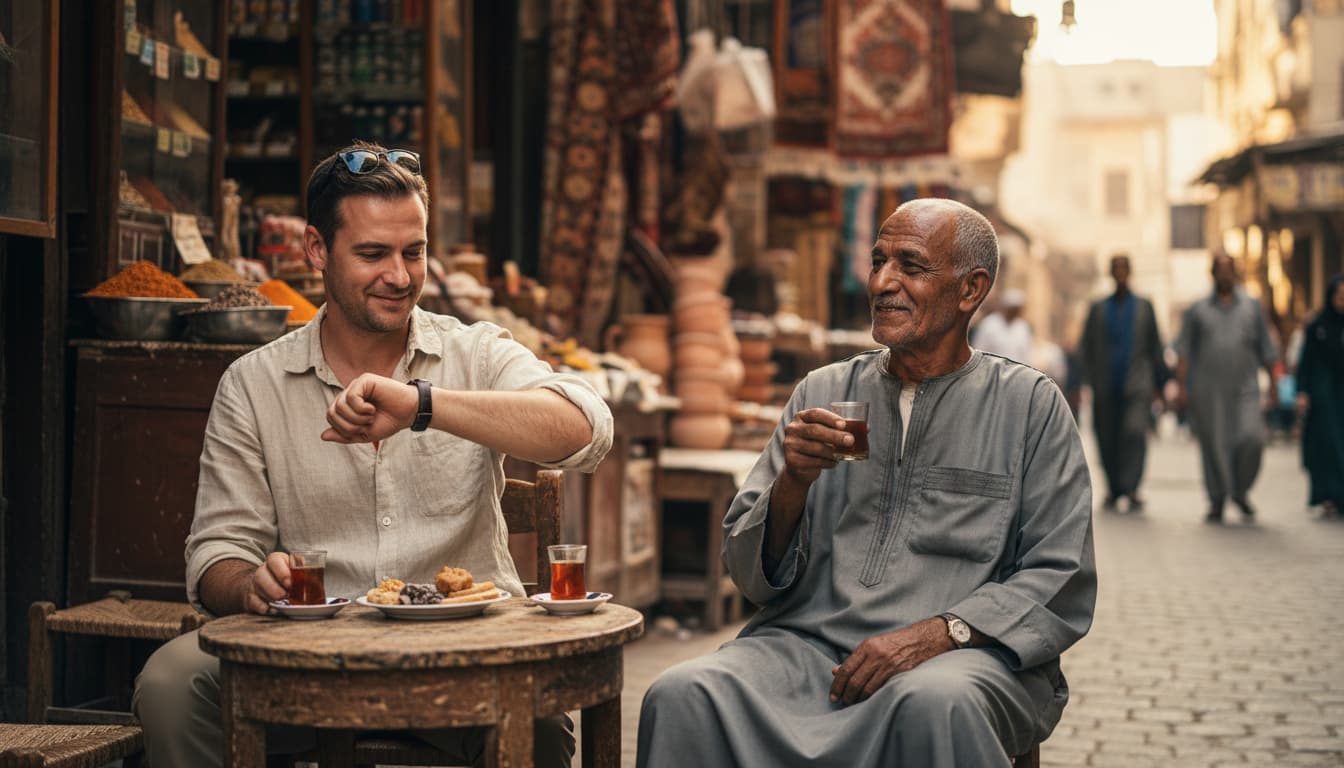
При изучении социальных и традиционных обычаев Египта важно понимать местное отношение к пунктуальности. Египтяне часто очень легкомысленно относятся ко времени. Это понятие часто ассоциируется с выражением ИншаАллах, что означает «Если на то будет воля Божья».«Не удивляйтесь, если местный житель опоздает на назначенную встречу. В Египте «пять минут» легко могут превратиться в 15 или 20 минут. Такое опоздание редко воспринимается как неуважение или грубость. Мы рекомендуем путешественникам проявить терпение и не злиться. Вы даже можете сами немного опоздать, чтобы адаптироваться к местному ритму жизни».
Региональные различия: связь обычаев с местностью.
Чтобы освоить социальные и традиционные обычаи Египта, полезно знать, что в разных регионах существует свой неповторимый «колорит» гостеприимства. В зависимости от того, куда вас заведёт ваше приключение, вот чего следует ожидать:
1. Каир и Александрия: Городской ритм
В этих огромных мегаполисах традиции представляют собой смесь современной скорости и древних корней.
-
Обычай: Вы заметите динамичную обстановку, где ценятся «житейская смекалка».
-
Совет: В Каире в кафе очень распространена практика «азума» (вежливое требование заплатить за еду или чай). Не удивляйтесь, если продавец предложит вам стул и напиток еще до того, как вы обсудите цены — это городской способ установления социальных связей.
2. Верхний Египет (Луксор и Асуан): Саидские традиции
Юг Египта известен как родина «Саидитский народ»которые известны как самые традиционные и чрезвычайно гостеприимные люди в стране.
-
Обычай: Здесь дресс-код гораздо более консервативный, чем на севере. Вы часто увидите мужчин в традиционной одежде. Галабея.
-
Совет: На юге уважение к старшим имеет первостепенное значение. При практике социальные и традиционные обычаи в Египте Здесь всегда здороваются первыми с самым старшим человеком в группе. Их гостеприимство легендарно; если вас пригласили в дом в нубийской деревне, это считается большой честью.
3. Ривьера Красного моря (Хургада и Шарм-эль-Шейх): ворота в море.
Этот регион, являющийся базой для компании Hurghada Today, представляет собой настоящий плавильный котёл культур. Здесь пустыня встречается с морем, а бедуинская культура — с международным туризмом.
-
Обычай: Несмотря на то, что курорты отличаются либеральными взглядами, местные бедуинские племена в окружающей Восточной пустыне придерживаются строгих кодексов чести и гостеприимства, свойственных пустыне.
-
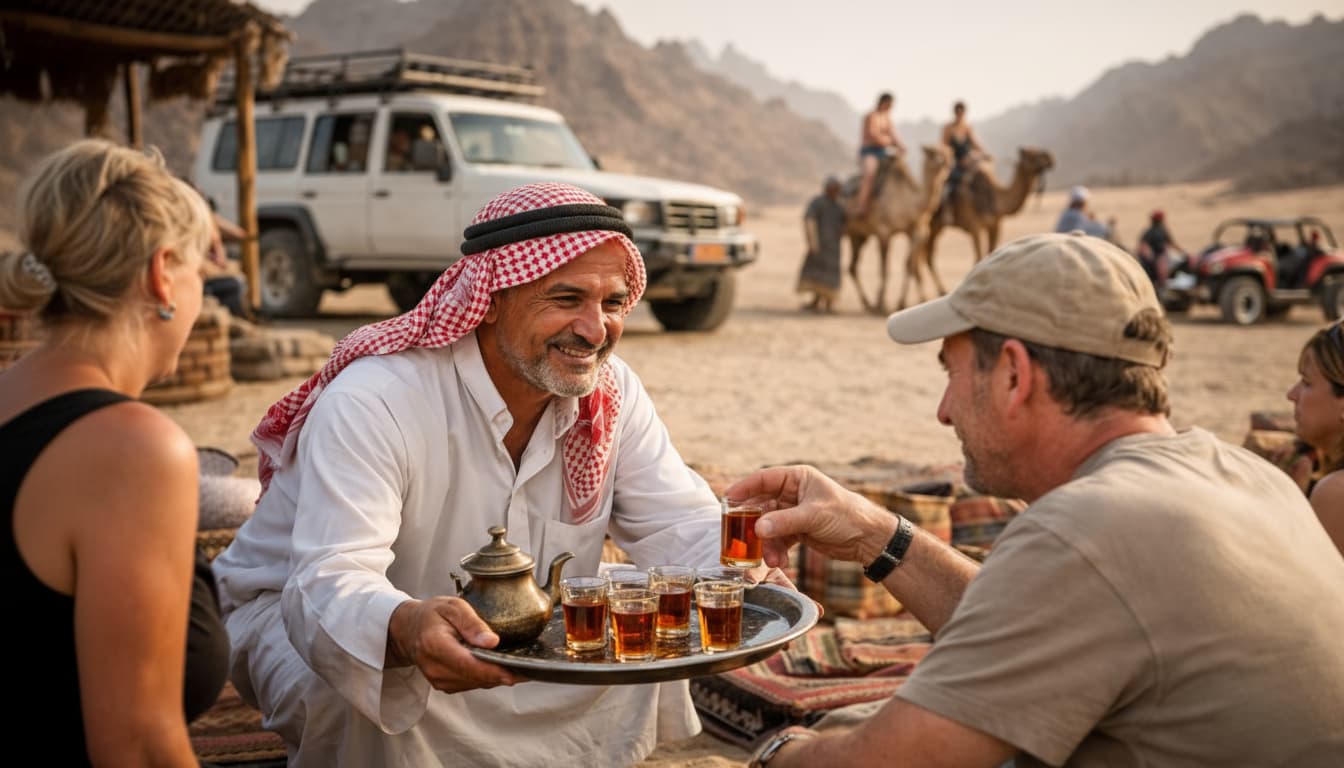
Совет: Если вы отправитесь на сафари по пустыне, вы можете увидеть следующее: традиционная чайная церемонияСуществует обычай принимать хотя бы одну чашку (всегда правой рукой) в знак дружбы между путешественником и жителем пустыни.
Ключ к подлинному Египту
Принятие этих местных обычаев не только обеспечивает комфортное путешествие, но и свидетельствует о глубоком уважении к наследию, насчитывающему тысячелетия. В Hurghada Today мы знаем, что когда вы чтите традиции сообщества, сообщество отвечает вам взаимностью. Возьмите эти знания с собой, и вы обнаружите, что Истинная магия Египта кроется в сердцах и домах. которые открываются тем, кто путешествует с уважением.