


To truly experience the heart of the Middle East, one must look beyond the monuments and understand the people. Social and traditional customs in Egypt are built on a foundation of immense generosity and deep-rooted respect. For guests of Hurghada Today, knowing these local “unwritten rules” can transform a standard vacation into a life-changing cultural exchange.
Hospitality and “Karam”
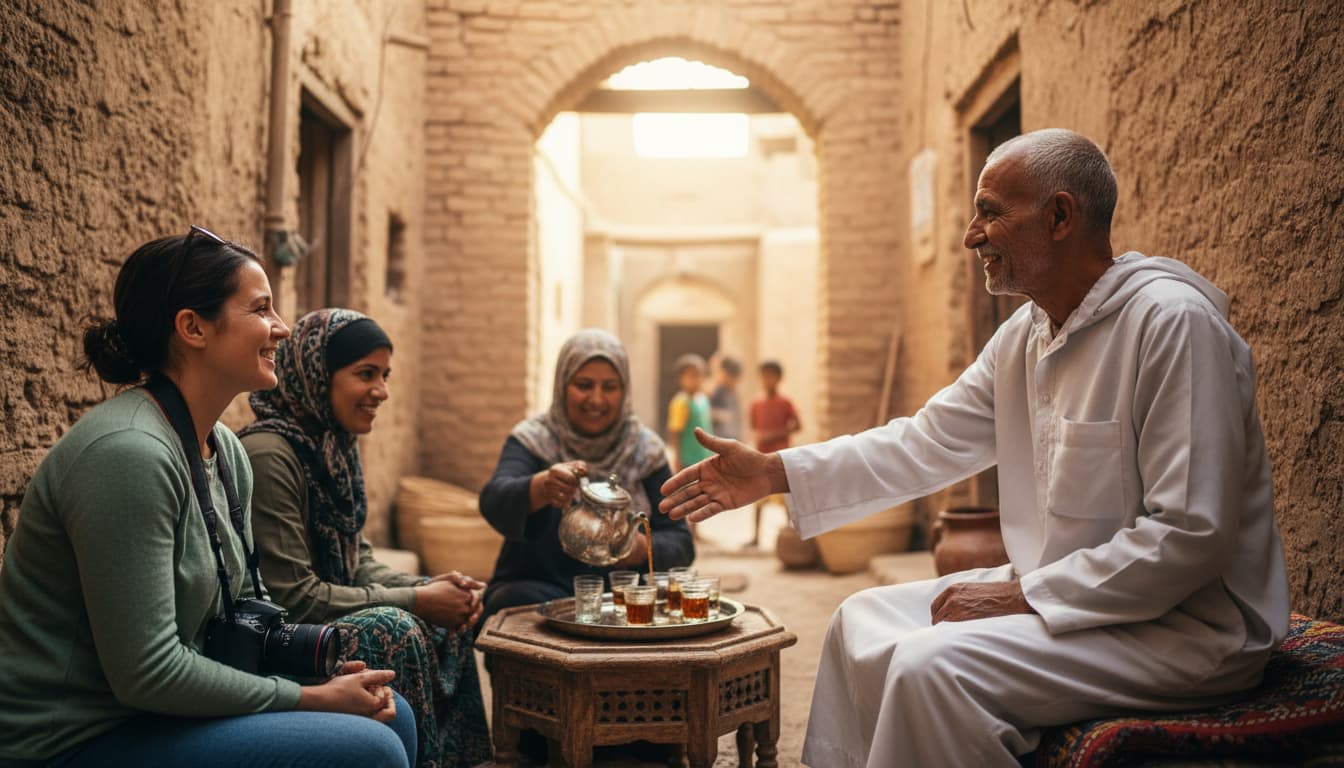
Hospitality, or Karam, is perhaps the most important of all social and traditional customs in Egypt. Egyptians take great pride in making guests feel welcome.
-
Accepting invitations: If a local invites you for tea or a meal, it is a genuine gesture. While it is polite to initially decline (a custom called Azouma), if they insist, accepting is considered very respectful.
- The sacrifice of the host: One of the most touching customs in Egypt is that even the most modest families will offer everything they have to a visitor. It is common for a family to bring out their finest food and hidden storages to prepare a feast for you. You might find fresh juices on the table even if it was the last fruit they had. In an Egyptian home, the philosophy is that nothing is too good for a guest.
-
The gift of giving: If you are invited to an Egyptian home, never arrive empty-handed. Bringing sweets, chocolates, or small gifts for the children is a standard tradition.
Dining etiquette and the “Right hand” rule
Food is the language of love in Egypt. However, there are specific customs regarding how you eat:
-
The right hand: Always use your right hand for eating, especially when handled food like bread. The left hand is traditionally considered unclean.
-
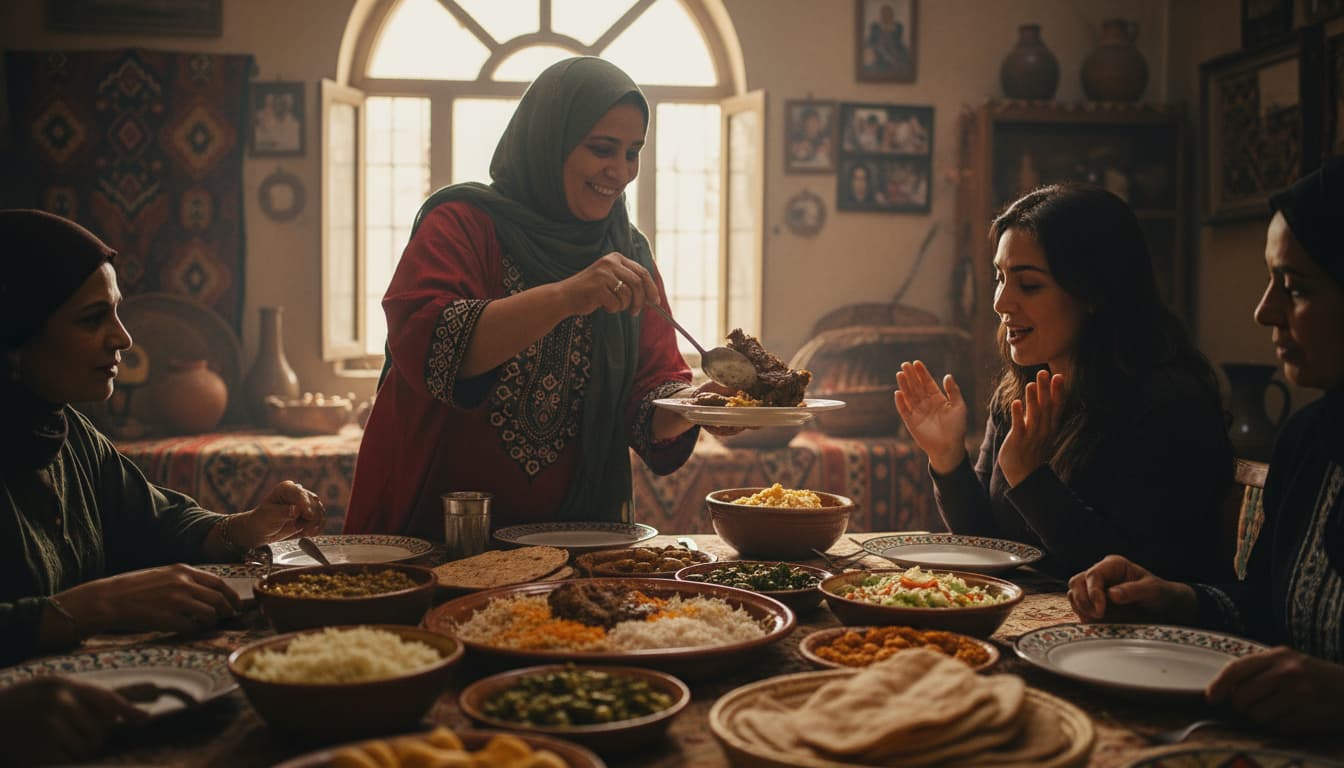
The “Mother’s portion”: Do not be surprised if the female host (the mother or wife) personally places the largest and best cut of meat directly onto your plate. This is a sign of high honor and affection.
-
The infinite offer: You may be offered seconds or thirds hundreds of times! Even if you say you are full, the host will likely insist you take more. This persistent offering is a hallmark of Egyptian hospitality. They want to ensure you leave the table truly satisfied.
-
The “Salt” compliment: If you are eating in a home, avoid adding salt to your food before tasting it. Doing so might suggest that the host’s cooking is lacking.
-
Leaving a little: It is often polite to leave a very small bite on your plate. This signals to the host that they have provided more than enough and you are completely satisfied.
Modesty and dress code as social and traditional customs in Egypt
Egypt is a conservative country, and respecting the local dress code is one of the most vital customs in Egypt. While resort areas like Hurghada are more relaxed, when visiting cities or local markets, it is respectful to cover shoulders and knees. When entering a mosque, both men and women must remove their shoes. Women should cover their hair, hands and legs with a scarf and abaya, which is usually provided at the entrance of major tourist mosques.
Body language and public conduct
Understanding non-verbal communication is key to navigating customs in Egypt. In Egypt, the concept of personal space is closer than in the West. It is common to see people of the same gander standing or sitting very close to one another during conversation. Holding hands is generally okay for married couples. But heavy public displays of affection (like kissing) is considered inappropriate in public and can be offensive to locals. It is very common to see men hugging each other, walking arm-in-arm, or holding hands in public. For travelers is important to understand that this is a platonic sign of deep friendship and brotherhood, and it carries no connotation of homosexuality.
Understanding “Egyptian Time” and Insha’Allah
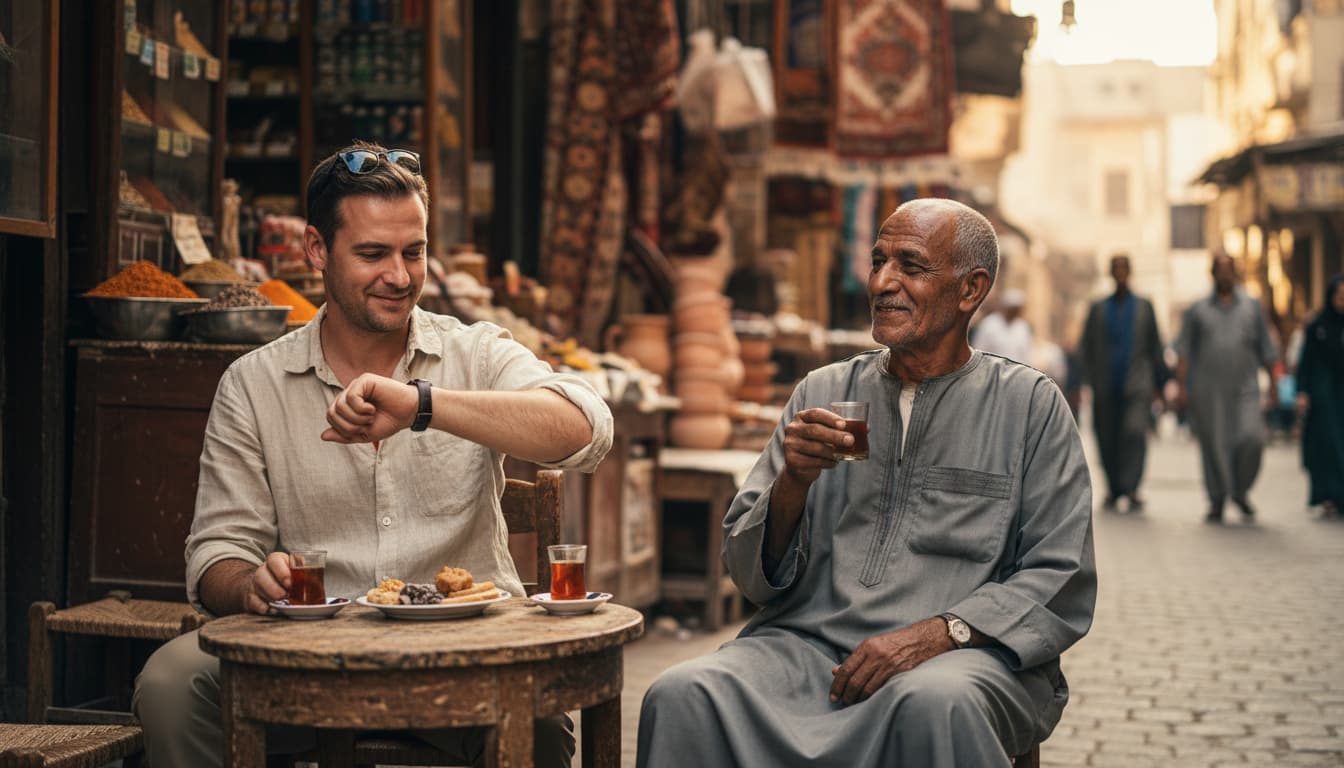
When considering the social and traditional customs in Egypt, it is essential to understand the local perspective on punctuality. Egyptians often have a very relaxed view of time. This concept is often associated with the expression Insha’Allah, which means “God willing.” Don’t be surprised if a local is not on time for a scheduled appointment. In Egypt, “five minutes” can easily turn into 15 or 20 minutes. This lateness is rarely seen as a sign of disrespect or rudeness. We recommend that travelers be patient and avoid getting angry. You can even plan to arrive a little later yourself to adapt to the local pace.
Regional variations: Connecting customs to the land
To master social and traditional customs in Egypt, it helps to know that different regions have their own unique “flavor” of hospitality. Depending on where your adventure takes you, here is what to expect:
1. Cairo and Alexandria: The urban pulse
In these massive metropolitan hubs, traditions are a mix of modern speed and ancient roots.
-
The Custom: You will notice a fast-paced environment where “street smarts” are valued.
-
The Tip: In Cairo, the “Azouma” (the polite insistence on paying for a meal or tea) is very common in cafes. Don’t be surprised if a shopkeeper offers you a chair and a drink before you even discuss prices—this is the urban way of establishing a social bond.
2. Upper Egypt (Luxor and Aswan): The Sa’idi traditions
The south of Egypt is known as the home of the “Sa’idi” people, who are famous for being the most traditional and fiercely hospitable people in the country.
-
The Custom: Dress codes are much more conservative here than in the north. You will often see men wearing the traditional Galabeya.
-
The Tip: Respect for elders is paramount in the south. When practicing social and traditional customs in Egypt here, always greet the oldest person in a group first. Their hospitality is legendary; if you are invited into a home in a Nubian village, it is considered a deep honor.
3. The Red Sea Riviera (Hurghada and Sharm El Sheikh): The gateway
As the home base for Hurghada Today, this region is a melting pot. It is where the desert meets the sea, and Bedouin culture meets international tourism.
-
The Custom: While the resorts are very liberal, the local Bedouin tribes in the surrounding Eastern Desert have strict codes of honor and desert hospitality.
-
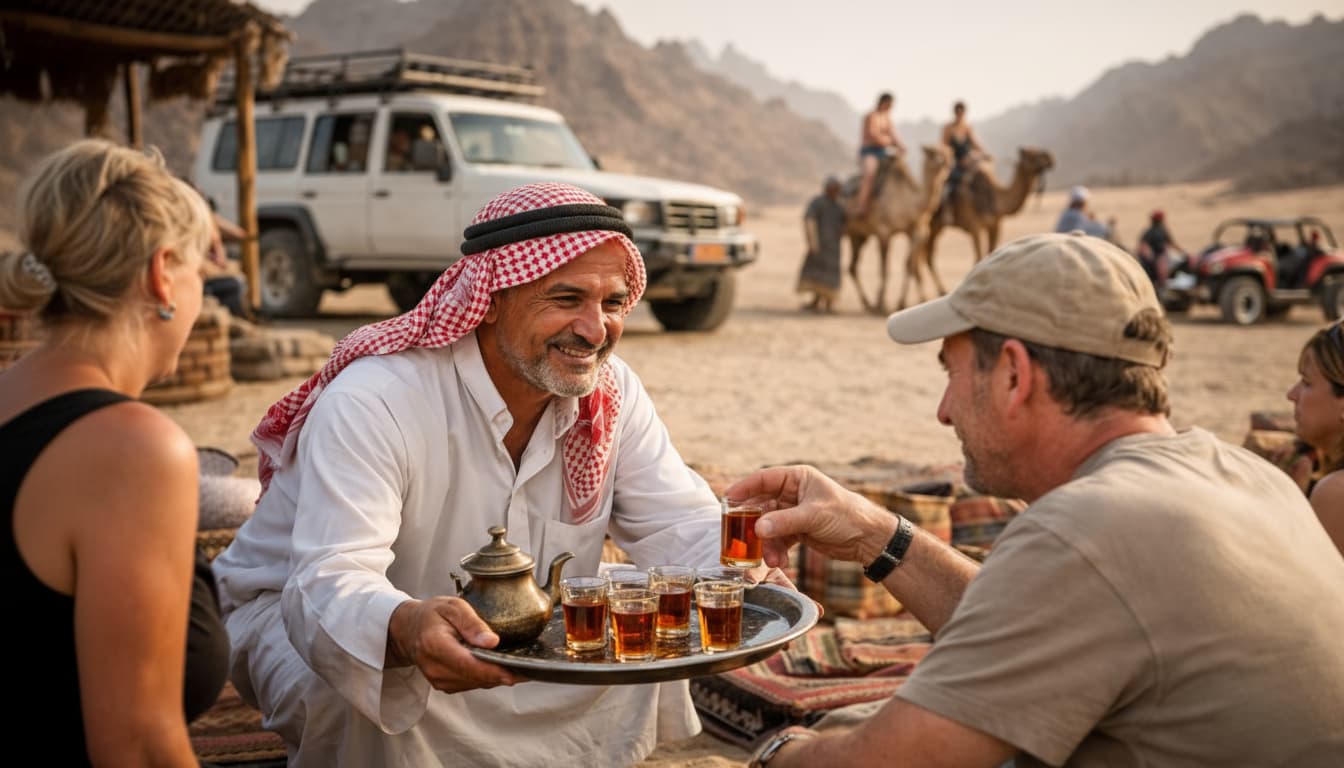
The Tip: If you join a desert safari, you might experience a traditional tea ceremony. It is a custom to accept at least one cup (always with the right hand) as a sign of friendship between the traveler and the desert dweller.
The key to an authentic Egypt
Embracing these local customs does more than just ensure a smooth trip—it signals a deep respect for a heritage that spans millennia. At Hurghada Today, we know that when you honor the traditions of the community, the community honors you in return. Carry these insights with you, and you’ll find that the true magic of Egypt lies in the hearts and homes that open up to those who travel with respect.