Dolphins in the Red Sea: Smart, social, and always interesting
If you spend any time in Egypt’s Red Sea, one thing becomes clear very quickly: dolphins are basically the ocean’s extroverts. They show up uninvited, swim around boats like they own the place, and somehow make every snorkeling trip feel like a documentary scene. But behind the “wow moment” tourism videos, dolphins in the Red Sea are actually far more interesting than just friendly ocean celebrities.
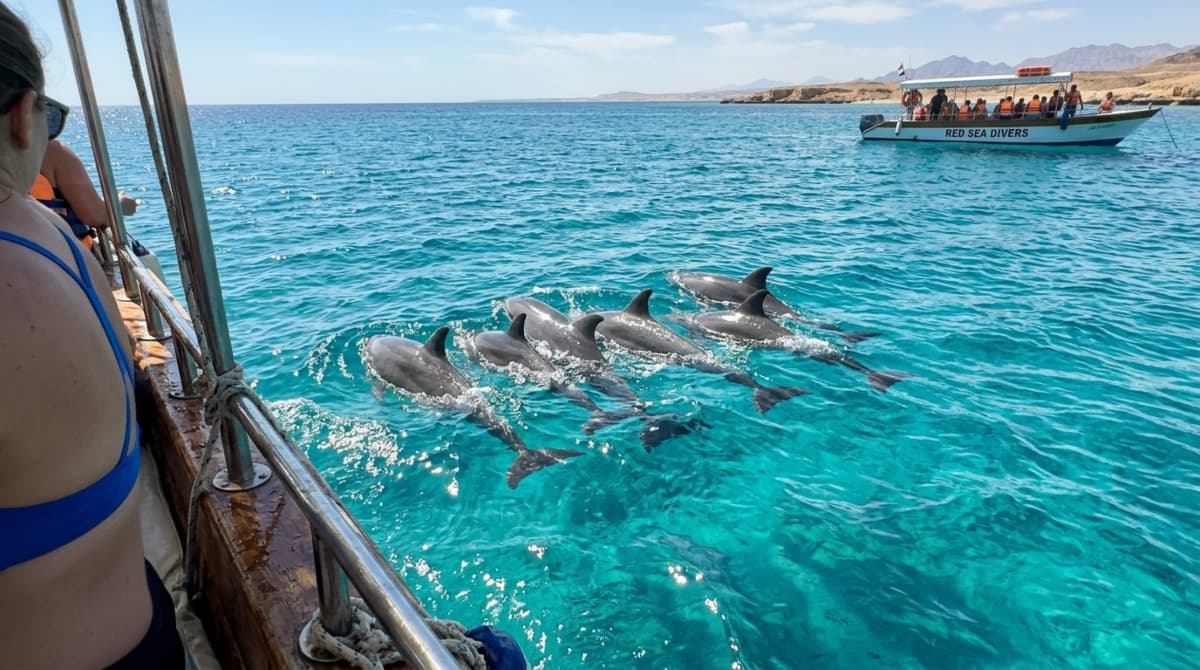
Dolphins in the Red Sea are often seen traveling and hunting together in highly social groups called pods.
1. Ocean IQ champions
Dolphins are widely considered one of the smartest animals in the ocean. And honestly, sometimes it feels like they know it. They have large, complex brains compared to their body size. They learn quickly, adapt fast, and solve problems in ways that still surprise scientists. Bottlenose dolphins, the most common type in the Red Sea, are especially clever. They recognize patterns, coordinate with each other, and seem to understand group strategy better than some humans in group projects.
2. Social life that never sleeps
Dolphins don’t really do “alone time.” They live in groups called pods, sometimes small, sometimes huge. And these pods are loud, in a good way. They communicate using whistles, clicks, and body movements. It’s basically an underwater group chat, but with better coordination and fewer misunderstandings. Each dolphin even has a unique whistle, like a name. So yes, they literally call each other.
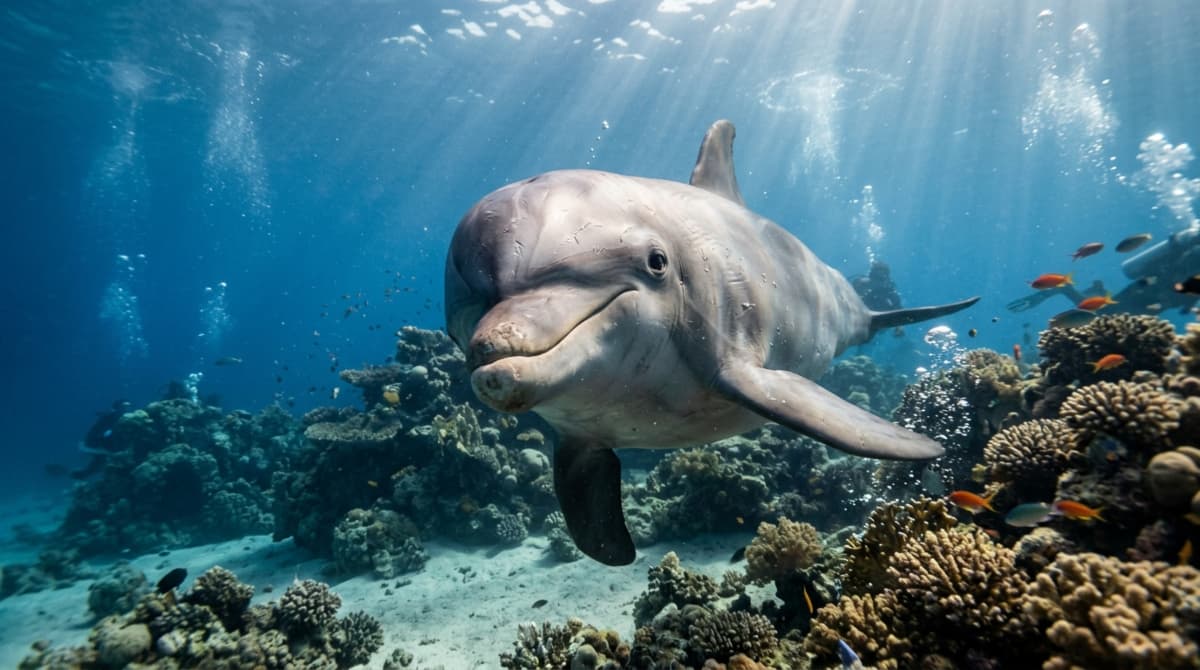
A curious bottlenose dolphin approaches a diver’s camera beneath the surface.
3. “Who am I?” Level intelligence
Dolphins are one of the few animals that can recognize themselves in mirrors. That’s a big deal in science because it suggests self-awareness. They also remember things extremely well. Other dolphins, locations, and even human interactions can stay in their memory for many years. Some have even been seen using simple tools, like protecting their snouts with sea sponges while searching for food. Basically: ocean survival meets DIY safety equipment.
4. Dolphins in the Red Sea
In places like Hurghada and the wider Red Sea region, dolphins are often seen near boats, divers, and snorkelers. And no, they are not there to “save the day” or act like ocean superheroes. They are usually just curious. Sometimes they swim close, sometimes they ignore everyone completely, classic selective social behavior. There is no solid scientific proof that dolphins intentionally protect humans from sharks. But they are naturally fast, alert, and very aware of their environment, which can sometimes create dramatic-looking encounters.
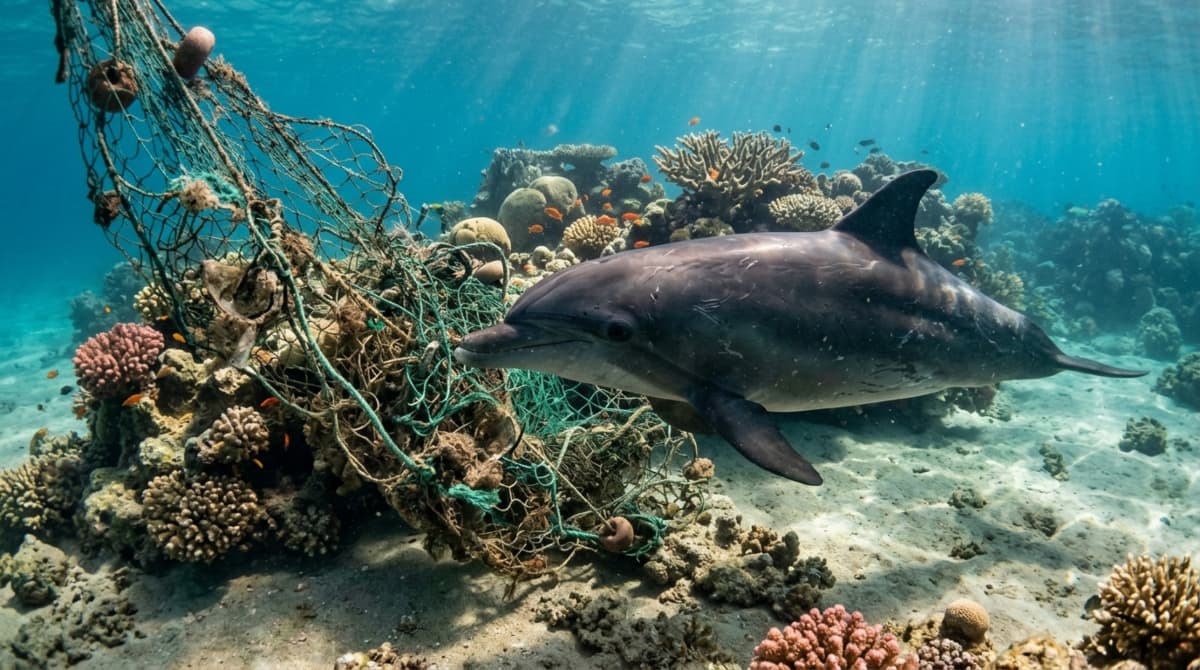
Marine pollution and fishing gear remain major threats to dolphin populations worldwide.
4. Documented cases of dolphin rescue
Numerous incidents worldwide demonstrate dolphins protecting humans from sharks or drowning:
In New Zealand (2004), a pod of dolphins surrounded four swimmers for 40 minutes to protect them from a 3-meter great white shark.
In Brazil and Mauritania, dolphins cooperate with local fishermen, driving schools of fish into nets in exchange for an easy meal.
There are even recorded cases of dolphins saving dogs and whales, lifting them to the surface to breathe.
These behaviors are not trained or conditioned; they are spontaneous and instinctive, suggesting an inherent capacity for altruism and social awareness.
5. The threats facing dolphins
Despite their intelligence and kindness toward humans, dolphins face serious threats from human activity:
Overfishing and large trawl nets cause thousands of accidental dolphin deaths yearly.
Chemical pollution and oil spills poison their habitats.
In some East Asian countries, such as Japan and Taiwan, dolphins are still hunted for meat, despite scientific evidence that dolphin flesh contains toxic mercury levels.
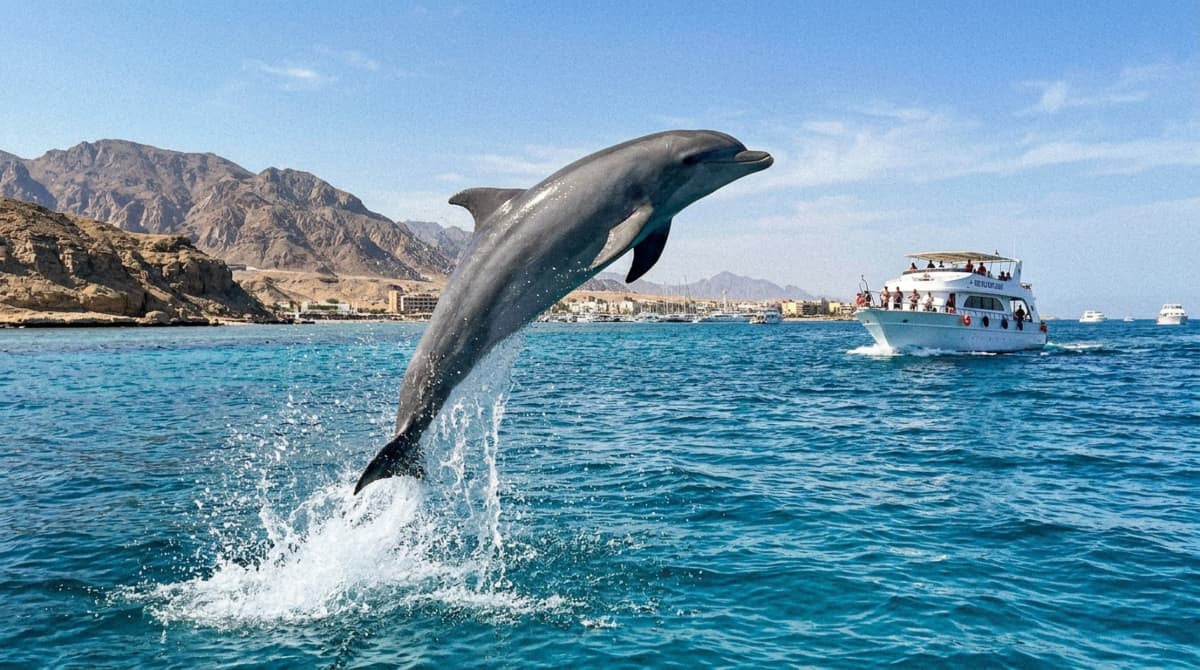
A playful dolphin jumps above the surface during a sunny day in the Red Sea.
Why dolphins in the Red Sea matter
Dolphins in the Red Sea are much more than a popular attraction for snorkelers and divers. Their intelligence, strong social bonds, and unique communication skills make them one of the most remarkable marine species on Earth. They also play an important role in maintaining the health and balance of the Red Sea ecosystem. Protecting dolphins in the Red Sea is about more than preserving a single species. It is about safeguarding the region’s rich biodiversity and the delicate marine environment that countless species depend on. Through conservation efforts and responsible tourism, we can help ensure that future generations continue to enjoy the sight of dolphins thriving in their natural habitat.
Check Egypt Entry requirements and official visa fees for your nationality instantly.
Visa on Arrival Available
E-Visa Pre-Application Required
Embassy Visa Required
The official Egypt visa-on-arrival fee is $25 USD, which can be purchased directly from the bank counters inside the arrival hall. Alternatively, tour operators and agency representatives can assist, but they may charge a small service fee.
You must apply for an E-Visa online at least 7 days before departure. The official website is visa2egypt.gov.eg. Do not use unofficial copycat websites.
Nationalities from this country must apply for a tourist visa via the nearest Egyptian Embassy or Consulate before traveling. Please contact them directly for required documents.
Official Fee:$25 USD
Passport Validity:At least 6 months required
Documents Required:Passport, 2 personal photos & hotel booking
Only purchase the visa sticker directly from the official Bank counters inside the arrival hall for $25 USD. Ignore pushy tour agency reps.
Avoid buying mobile SIM cards from unofficial agents; only use the official telecom provider booths in the exit hall.
Do not take random street taxis outside the exit hall. Agree on the fare beforehand or book a private transfer in advance.
Get a Question?
Do not hesitage to give us a call. We are an expert team and we are happy to talk to you.
Registration Successful!Your account has been created and your login details have been auto-filled. Please verify the Captcha and click Sign In.Continue to Sign In