

A töviskoronás tengericsillag (Acanthaster planci) az egyik leghírhedtebb tengeri élőlény. Tüskés megjelenéséről és koralléhségéről ismert, és ellentmondásos szerepet játszik a zátonyok ökoszisztémáiban. Although it is most commonly found in the area around Australia, it can also be seen in other seas, including the Red Sea. During their daily dives, divers throw this starfish out of the sea, although the extraction of other flora and fauna is prohibited. Today, thanks to the experts of the Hurghada Today agency, you will get acquainted with this marine creature.
Distinctive Traits of the Crown-of-Thorns Starfish
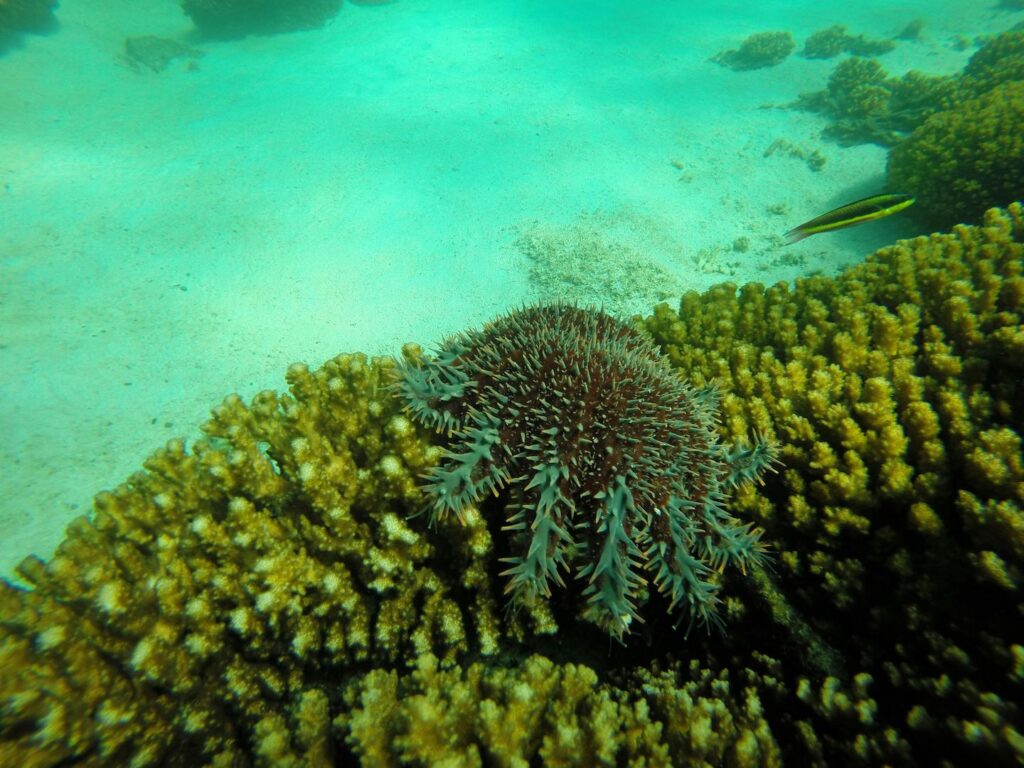
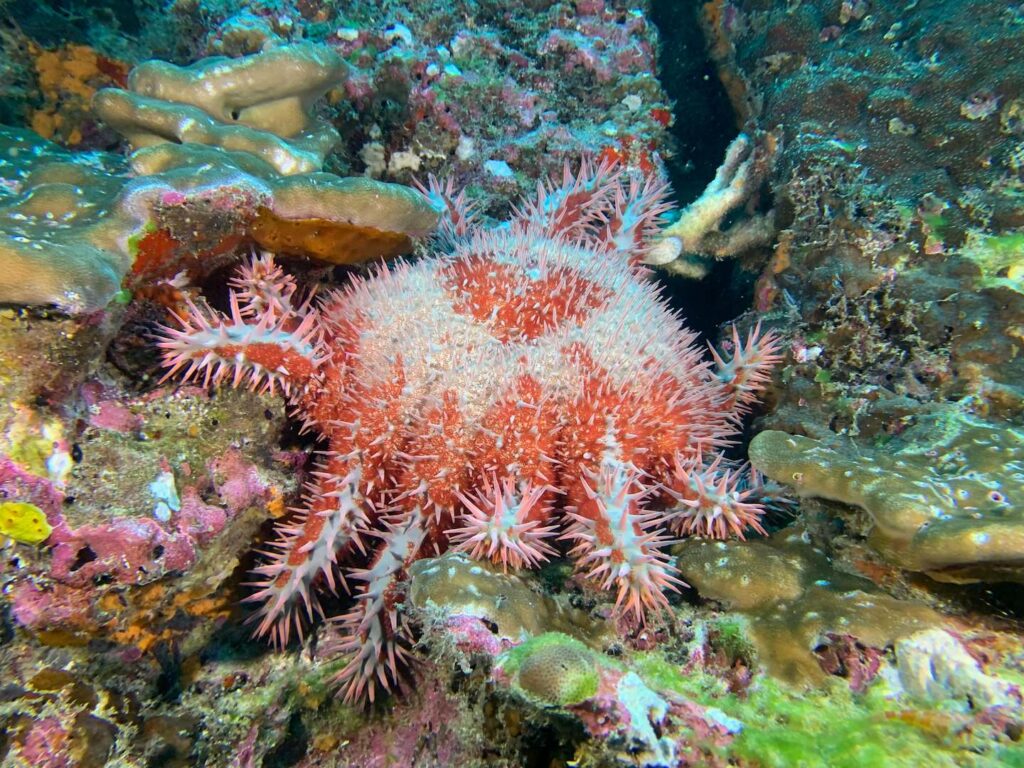
This starfish is named for its venomous spines, which resemble a crown of thorns. It can grow up to 35 cm (14 inches) in diameter, with 16 to 23 arms. Like most dangerous species, it has stunning colors that range from red and purple to green and brown.
Habitat and Diet
Crown-of-thorns starfish prefer warm waters, so it lives in coral reefs throughout the Indo-Pacific region. They are common in the Great Barrier Reef, the Vörös-tenger, and the tropical Pacific islands. We can find them at depths of 1 to 30 meters. This starfish feeds primarily on live coral polyps. It uses its stomach to digest coral externally, leaving behind bare, white skeletons. A single starfish can consume up to 10 square meters of coral in a year. They move slowly using their tube feet. While they don’t migrate long distances, they may disperse in search of food, especially during population outbreaks.
Reproductive Behavior and Mating Strategies of the Crown-of-Thorns Starfish
These starfish are prolific breeders. They spawn by releasing eggs and sperm into the water during specific seasons. A single female can produce millions of eggs in one spawning event. Fertilized eggs develop into larvae, which drift with currents before settling on the reef. Under certain conditions, crown-of-thorns populations explode. This often happens when water quality declines or predators are removed. During outbreaks, they can devastate coral reefs, eating large sections and causing long-term damage.
Interesting facts about this starfish
Here are some fascinating facts about the Crown-of-Thorns Starfish:
1. Like many other starfish, they can regenerate lost arms. If part of the central disc is attached, a single arm can grow into a new starfish.
2. During spawning, a single female Crown-of-Thorns starfish can release up to 60 million eggs in a single breeding season.
3. They are mainly active at night, using their tube feet to move across reefs.
4. Despite their defenses, they have natural predators, such as the giant triton snail, harlequin shrimp, and some species of fish.
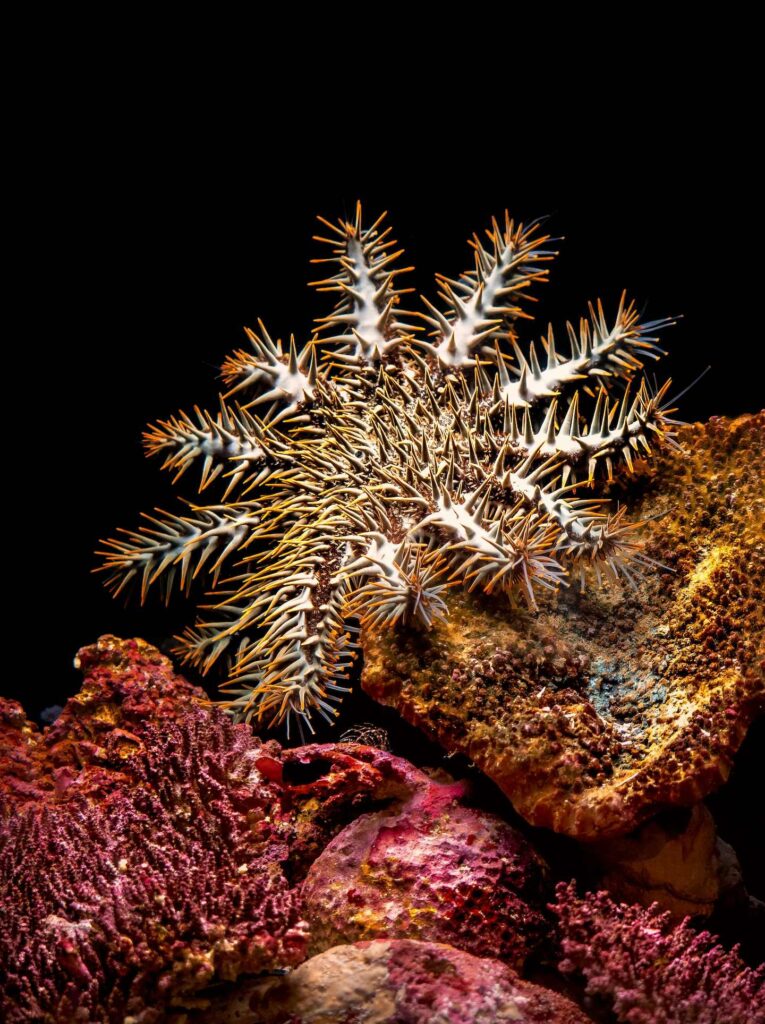
5. Their spines has toxic substance, saponin, which deters many potential predators.
These starfish are a remarkable yet challenging species in marine ecosystems.
Should it be exterminated?
Managing crown-of-thorns outbreaks is crucial to the health of reefs. Efforts include manually removing starfish or injecting them with a solution that kills them. Protecting against predators and improving water quality also help control populations. However, despite their destructive nature, crown-of-thorns starfish play a role in reef ecosystems. By consuming dominant corals, they create space for other species to grow. This balance is crucial, as outbreaks can overwhelm reefs. Therefore, understanding and managing their impact is essential for the conservation of coral reefs worldwide.